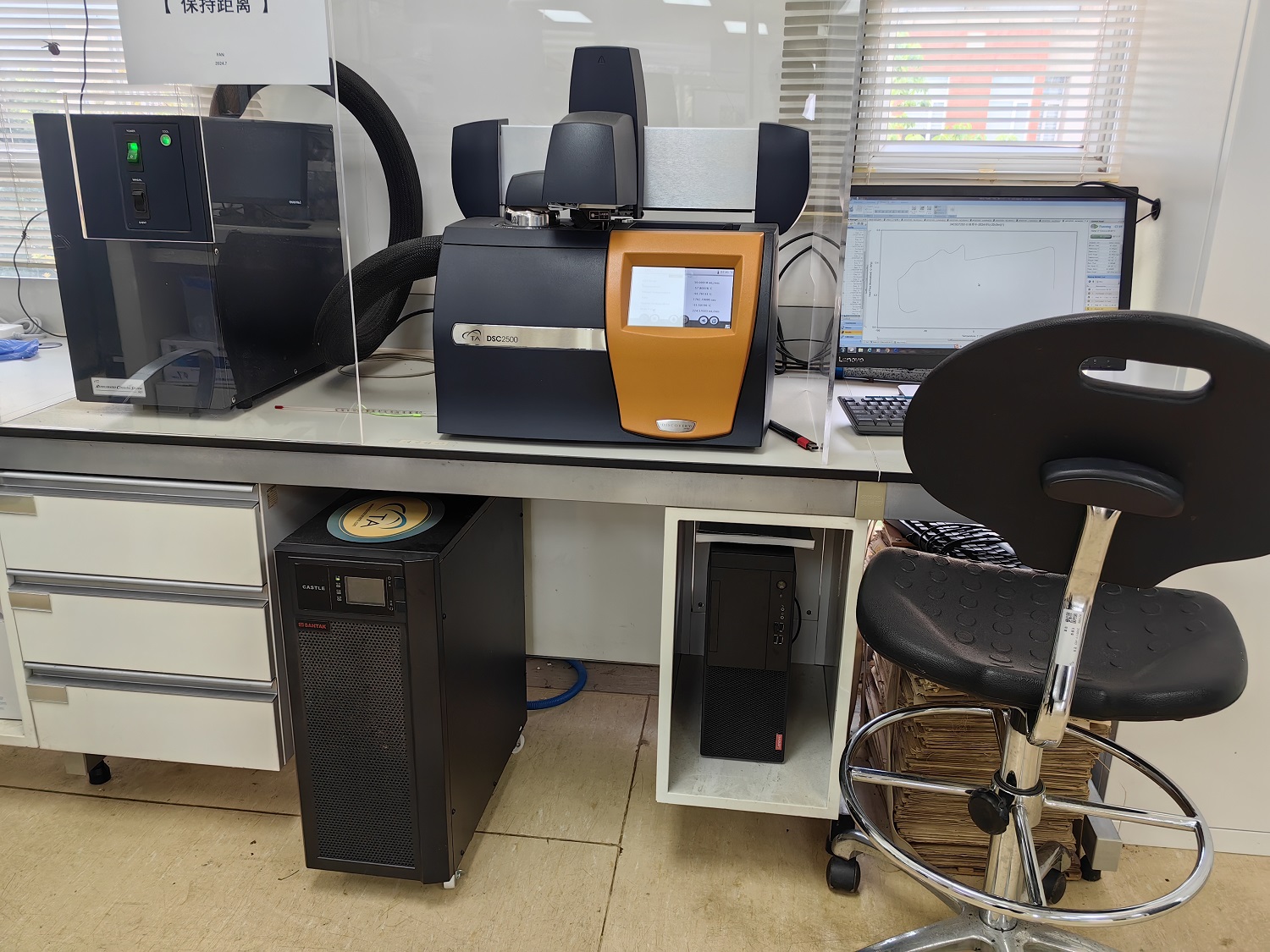
Differential Scanning Calorimetry(DSC)Analyzer
TA DSC2500
As the most widely utilized thermal analysis technique, Differential Scanning Calorimetry (DSC) measures endothermic and exothermic processes in samples. It is extensively applied to characterize diverse materials, including polymers, pharmaceuticals, foods, biological products, organic chemicals, and inorganic substances. DSC enables straightforward quantification of thermal events such as Glass transition temperature (Tg), melting and crystallization, curing reactions, oxidation onset points, and transition enthalpies. Building upon DSC heat-flow measurements, the technique supports advanced studies in reaction kinetics, specific heat capacity, compatibility and stability of blends and alloys, aging effects, and influence of additives on crystallization.
Hot flow DSC consists of a single heating furnace, in which samples and reference materials are placed while being heated or cooled under a controlled temperature program. The sample is encapsulated in a sample tray (usually made of aluminum) and placed together with an empty reference tray on a thermoelectric tray surrounded by a heating furnace. When the furnace temperature changes, heat is usually transferred to the sample and reference plate at a constant rate. Using Ohm's law for thermal equivalence, measure the heat flux difference between the sample and the reference using a surface thermocouple. Temperature range -180℃ to 725℃.