Nowadays macromolecular crystallography has become the dominant technique for protein structural determination. As the crystallization method developed, scientists get the crystals from proteins more quickly than before. The demand for beam time is rapidly increasing. High-throughput crystallography beamline is dedicated for high efficient and automatic data collection, thus it will not pursue the difficult cases of structural determination but will be very efficient for the crystal screening and structural determination in a large amount, to serve for a large number of users for conventional experiments in a cost-effective way. This beamline is designed to be a tunable beamline which can be used to carry out multi-wavelength anomalous diffraction (MAD) experiment. The energy range is from 5~20keV, which covers most of the absorption edges of the common-used anomalous elements. This beamline is composed of the bending magnet source, the front end, the beamline, and the experimental station. The energy range is from 5~20 keV, the energy resolution is less than 3×10e-4 (@12keV), the Flux at sample is larger than 5×10e11 ph/s (12keV @300mA),and focused beam size is within 120×80 μm2(H×V,12keV),and the focused beam divergence is within 1.5×0.2 mrad2 (H×V,@12keV).
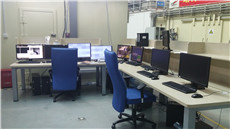
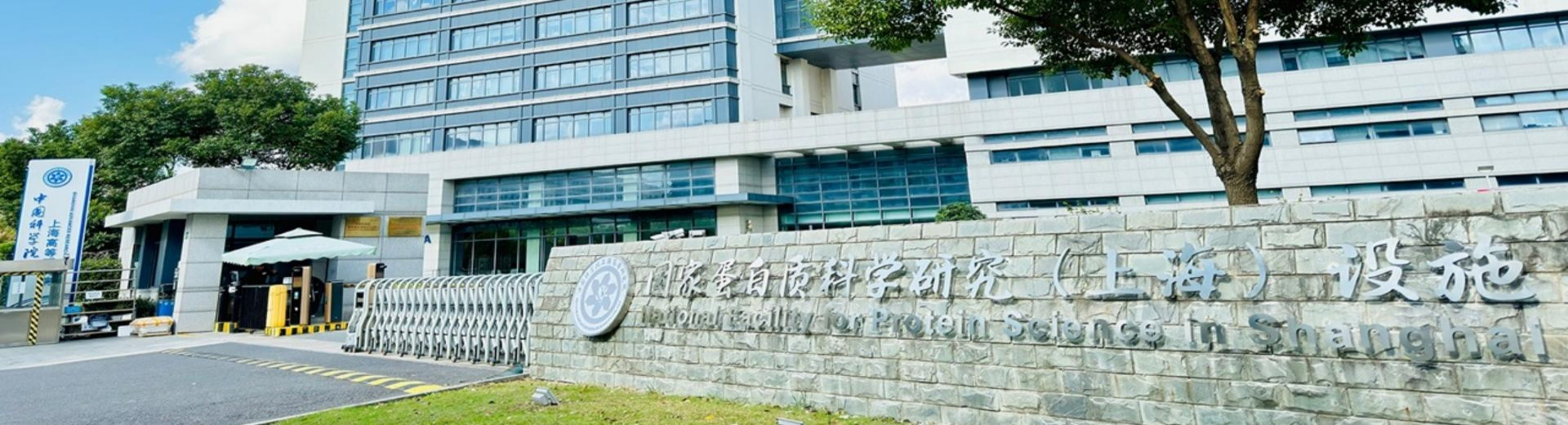
This beamline is an advanced data collection facility at NFPS/SSRF to the national user community and maintains high-profile user programs. It exploits major advances in x-ray crystallography and not only addresses the structural biology problems,but also addresses studies on material and chemical crystal structure. The MarCCD MX325 detector is equipped at this beamline. MD2 Microdiffractometer with high-speed and high-precision air bearing goniometer is used as the sample holder and sample centering system. It also equips with an automated sample changer,which makes it possible to collect data remotely.