Structure determination of protein complexes is now the important direction of structural biology development. The structure of protein complexes and assemblies is the basis for interpreting the function of them. Its development goal is to study the increasingly complex protein complex system and the systematic function of molecular machines, organelles, such as virus, ribosome, etc. Protein complex crystallography beamline is aimed mainly at the structural determination of large protein complexes and assemblies, crystals of which typically have large unit cell and week diffraction, especially those of large protein complexes and membrane proteins with huge molecular weight and large unit-cell parameters (unit cell parameters up to 3000Å).
The brilliant and parallel beam is required to facilitate the structural determination of crystals of large unit cell. The big cell parameters in real space induce fine small reciprocal spacing, and the many diffraction points are difficult to separate from each other. In order to improve the resolution between individual points, the divergence of the incident X-Ray beam should be reduced: the smaller the divergence, the higher the resolution. The highly collimated x-ray will improve the diffraction data in following ways: it will shrink the broadening of the diffraction spot, thereby improving the signal–to-noise ratio, and this will have the effect to increase resolution of the crystal structure that is being determinated, especially for macromolecular complex crystals.
This beamline is composed of the undulator source, the front end, the beamline, and the experimental station. The energy range is from 7~15 keV, the energy resolution is less than 2×10e-4 (@12keV), the Flux at sample is larger than 1.5×10e12 ph/s (12keV @300mA), the focused beam size is within 120×80 μm2 (H×V, @12keV), and the focused beam divergence is within 0.1×0.1 mrad2 (H×V, @12keV).
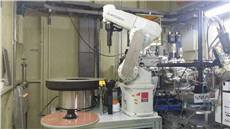
This beamline is an advanced data collection facility at NFPS/SSRF to the national user community and maintains high-profile user programs. It exploits major advances in macromolecular x-ray crystallography and addresses the most challenging structural biology problems to advance scientific knowledge. The up-to-date detector Pilatus-3-6M is equipped at this beamline. MD2 Microdiffractometer with high-speed and high-precision air bearing goniometer is used as the sample holder and sample centering system. It also equips with an automated sample changer, which makes it possible to collect data remotely. Based on the dedicated equipment, shutterless data collection method is achieved, which make it possible to collect a set of data within 1 minutes.