Many natural products and drugs contain flexible alkyl chains. These molecules consist of long carbon chains that are typically highly flexible. For such samples, the traditional crystal sponge method can complex them into the pores of metal-organic frameworks (MOFs) for structural determination using single-crystal X-ray diffraction (SC-XRD). However, traditional crystal sponge sample preparation is cumbersome, lacks selective recognition for target molecules, and faces challenges in resolution accuracy. Long alkyl-chain molecules generate highly disordered structures upon complexation with crystal sponges, making their single-crystal structure determination exceptionally difficult.
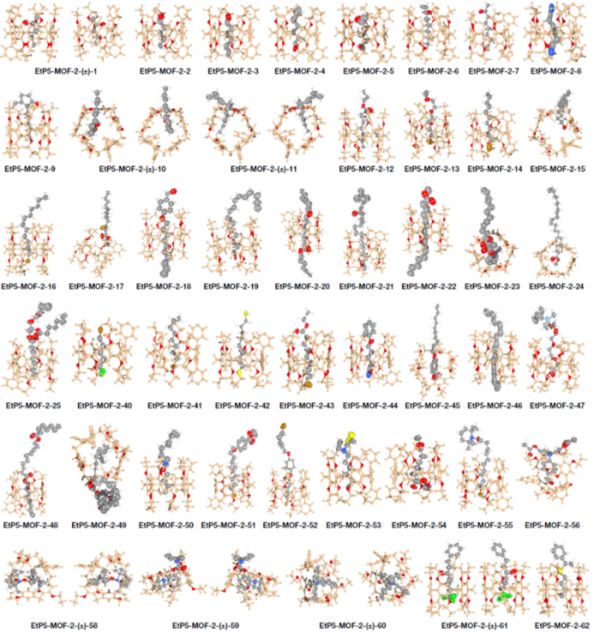
Professor Huang Feihe of Zhejiang University and his collaborative team—users of the National Facility for Protein Science in Shanghai (NFPSS)—have introduced a transformative approach. They utilized pillar[5]arene-doped MOF materials for supramolecular docking and structural analysis of previously challenging alkyl-bearing molecules. This method features simple experimental operation, short testing time, and broad substrate applicability, demonstrating significant potential for structural determination of natural products, pharmaceuticals, and organic synthetic intermediates. Furthermore, this research will profoundly impact structural determination across multiple scientific fields, marking a major advancement in crystallographic methods and chemical analysis techniques.
The BL17B1 Beamline Station at the National Facility for Protein Science in Shanghai (NFPSS) provided beamtime and experimental support for SC-XRD characterization in this study. The research findings were published in Nature under the title:"Supramolecular docking structure determination of alkyl-bearing molecules"