Methane hydrate is a widely distributed energy resource in nature, mostly in marine continental margins. Understanding methane hydrate formation kinetics in natural fluids is essential for practical applications of hydrates, such as fluid selection for gas storage and separation. The effect of fluid environment on hydrate formation has been identified. However, laboratory experiments typically employ pure water and artificial seawater, leading to unclear hydrate formation kinetics in natural fluids. Therefore, further exploration of methane hydrate formation kinetics in complex environments is required for hydrate utilization and development.
Recently, the research team led by Prof. Luan Zhendong from the Institute of Oceanology of the Chinese Academy of Sciences (IOCAS) revealed the methane hydrate formation kinetics in bottom seawater and cold-seep fluids. The outcome was published in Chemical Engineering Journal on 8 May.
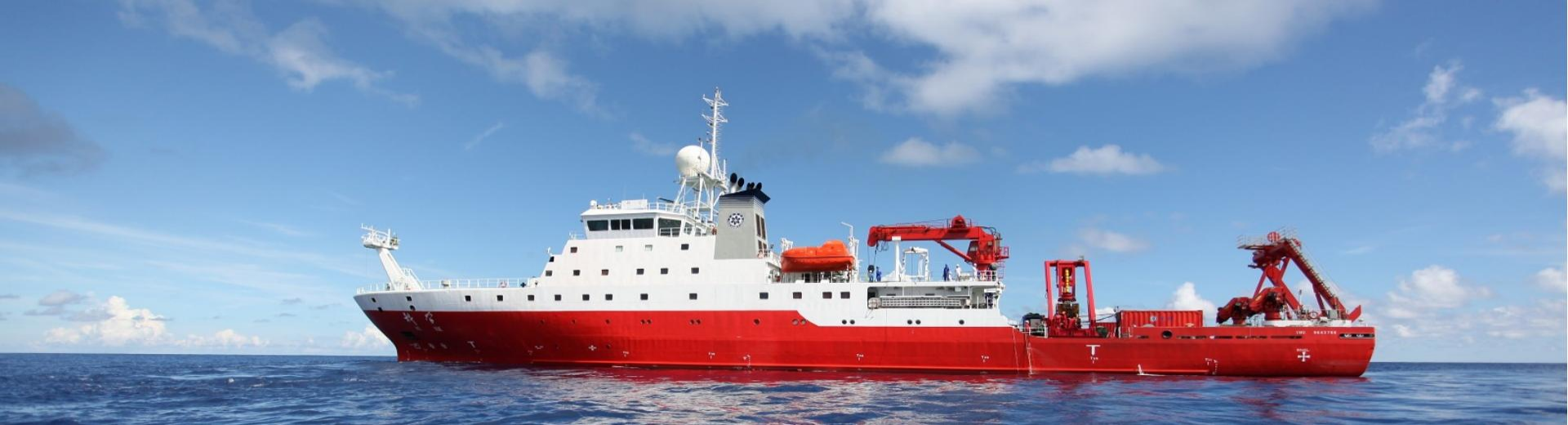
This study explored the microscopic methane hydrate formation process in pure water, bottom seawater, and cold-seep fluids from both temporal and spatial morphology perspectives using Raman spectroscopy. Among the samples used in this study, in situ bottom seawater and cold seep fluids were obtained by RV KEXUE from Site F cold seep area in the northern South China Sea (SCS) using fidelity sampling technology. Detailed variations in methane hydrate nucleation kinetics were observed at ten-second intervals, and the evolution of dissolved and hydrated methane was analyzed for various fluids. Results showed that high salinity bottom seawater (salt ion concentrations 1.5 times that of cold-seep fluids) significantly decreased dissolved methane solubility (30%), prolonged induction time (24%), reduced the overall conversion ratio (5%) and rate of hydrated methane (20%), and inhibited the relative occupancy rate of small cages (25%). Although low salinity cold-seep fluids with tiny particles slightly decreased dissolved methane solubility and prolonged induction time, it promoted stable sI hydrate formation. Spatial morphology observations indicated that fluids affected hydrate formation morphology without significantly affecting spatial distribution characteristics.
This work provides fundamental kinetic characteristics of methane hydrate formation in natural environments and sheds light on fluid selection for gas storage and separation.

Images and corresponding spectra of representative points in the line scan Raman spectra for (a) Pure water, (b) Bottom seawater, and (c) Cold-seep fluids
Zhang,Y.,Zhao,K.,Ma,L.,He,W.,Xi,S.,Luan,Z.,Zhang,X*. & Du,Z*. (2025). Methane hydrate formation kinetics in bottom seawater and cold-seep fluids. Chemical Engineering Journal,163547

