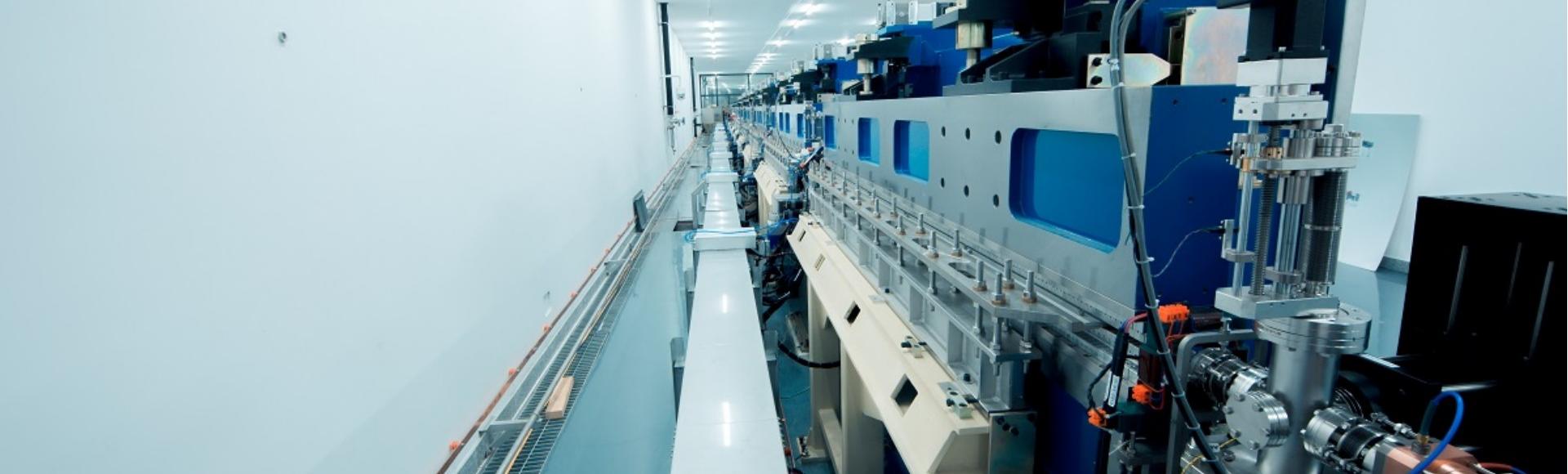
Recently, the Dalian Light Source Research Laboratory of Dalian Institute of Chemical Physics published a review article on the current operation status and scientific applications of the Dalian Coherent Light Source. The article introduced the excellent characteristics, operation and upgrade status of the Dalian Coherent Light Source. The scientific application of Dalian Coherent Light Source will be showcased in the fields of cluster science, atmospheric science, molecular photochemistry, energy catalysis, life science, and ultrafast dynamics of molecular excited states.
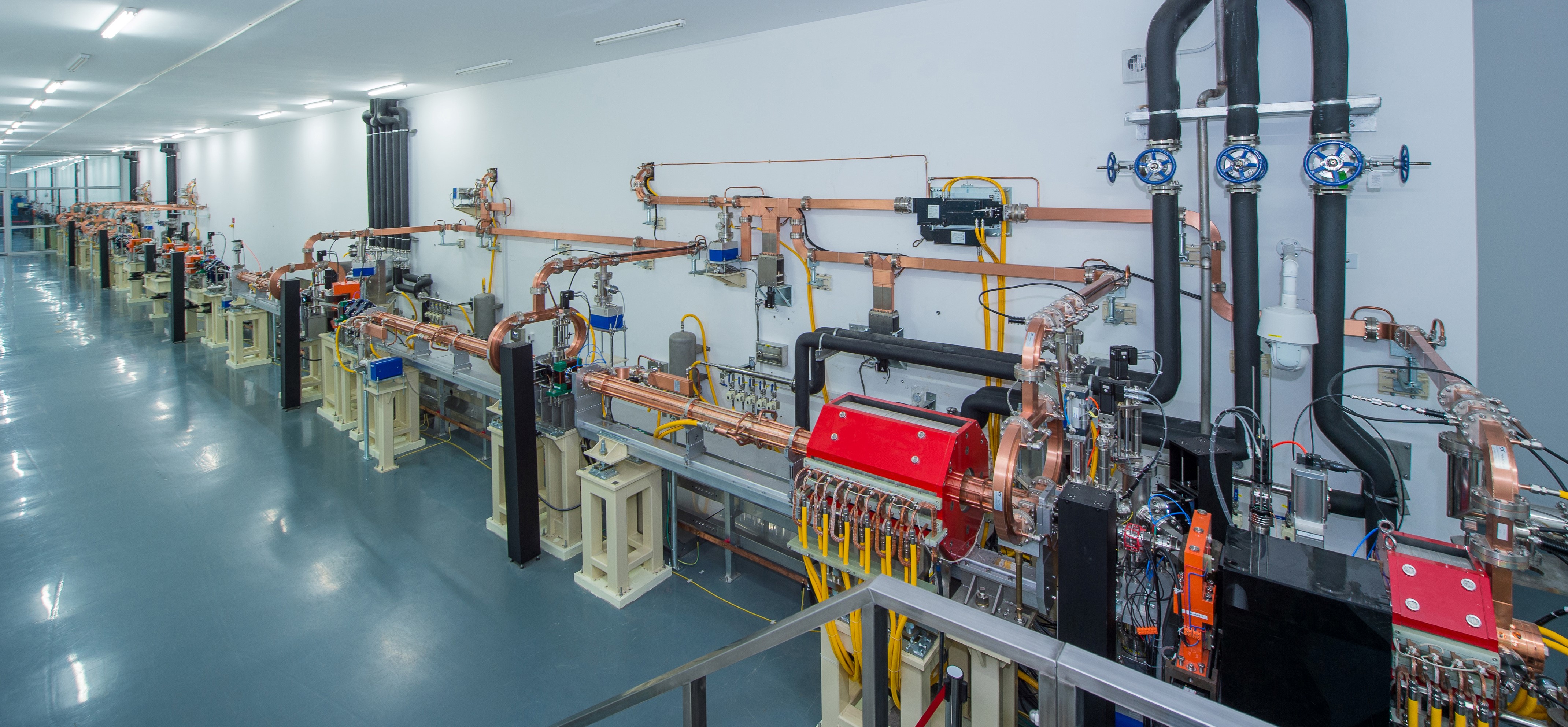
Advanced light sources are playing an increasingly important role in cutting-edge scientific research. In recent decades, breakthroughs in free electron laser technology have provided scientists with important tools to explore the unknown world, discover new scientific laws, and achieve technological changes. The Dalian Coherent Light Source is China's first tunable extreme ultraviolet free electron laser comprehensive experimental device based on the high-gain harmonic amplification (HGHG) mode, featuring ultra-high brightness and ultrafast time characteristics. It is also the only free electron laser user device operating in extreme ultraviolet in the world. The Dalian Coherent Light Source officially broke ground in 2014. In 2017, it successfully achieved high-gain harmonic amplification mode (HGHG) emission of free electron laser. In July 2018, the device was officially accepted and included in the Major scientific and technological infrastructure Sharing Service Platform of the Chinese Academy of Sciences in the same year, and was officially opened to the public. Closely integrated with advanced experimental methods such as ionization detection, mass spectrometry and spectroscopy, the Dalian Coherent Light Source has gradually developed into a unique experimental research platform for basic physical chemistry in the world.
Since its acceptance, the Dalian Coherent Light Source has been operating stably for many consecutive years, providing users with high-quality extreme ultraviolet light sources. The Dalian Coherent Light Source has reached the international advanced level in terms of total operating hours, user hours, and the proportion of user hours. During the operation period, the Dalian Coherent Light Source simultaneously completed several important technical upgrades, and the performance of the device steadily improved. By adopting the wedge undulator technology, the output free electron laser pulse energy can reach up to 1mJ (@120nm) at most. The wide-range continuous scanning technology of free electron laser wavelengths has been realized, providing the necessary conditions for the spectral detection of free radicals. In 2021, Dalian Coherent Light Source completed the installation and commissioning of the second free electron laser beam line and successively achieved the self-amplified spontaneous emission (SASE) and high-gain harmonic amplification (HGHG) mode emission of the second undulator beam line. Compared with the first free electron laser beam line, the second free electron laser beam line adopts an elliptical polarization undulator, which can achieve arbitrary tunability of the free electron laser polarization, greatly expanding the performance of extreme ultraviolet free electron lasers and meeting the needs of basic scientific research related to polarization.
Dalian Coherent Light Source focuses on the world's scientific and technological frontiers and people's health, conducting forward-looking scientific research. Scientific users have taken advantage of the unique properties of the Dalian Coherent Light Source to establish the Molecular Photochemistry Experimental Station, the Aerosol Mass Spectrometry and nucleation Mechanism Research Experimental Station, the Neutral Cluster Infrared Spectroscopy Experimental Station, the Ultraviolet Laser dissociation-high-resolution Mass Spectrometry Experimental Station, the free Radical Detection Experimental Station, and the cross-molecular Beam - Time Slice Velocity Imaging Experimental Station. Advanced experimental methods and techniques such as high-resolution hydrogen atom high-Riedberg state labeling time-of-flight mass spectrometry, neutral cluster infrared spectroscopy based on extreme ultraviolet ionization, double resonance neutral metal cluster infrared spectroscopy, aerosol mass spectrometry, and extreme ultraviolet light dissociation-biological macromolecule mass spectrometry have been developed successively. Using these methods, molecular photochemistry at the Interstellar Science Center (Nat. Commun.,2019; Nat. Commun., 2021; J. Phys. Chem. Lett. ,2022; Nat.Commun.,2020; Nat.Commun.,2021; Research on the Evolution Mechanism of Water Structure (Phys. Chem. Chem. Phys. 2020), PNAS.,2020; Nat.Commun.,2020; Cell.Rep.Phys.Sci., 2022;) Research on Related Mechanisms of Energy Catalysis (Nat. Commun.,2019; Rev. Sci. Instrum.,2020; J. Phys. Chem. Lett., 2021;) Analysis of the Molecular Structure of living Matter (Anal. Chem., 2022; Chem. Commun., 2021;) A series of important scientific research achievements have been made in such fields.
This review, titled "Operational Status and Scientific Applications of Coherent Light Sources in Dalian", was recently published in Science China. In a special issue on methodology of chemical measurement based on large scientific facilities in SCIENTIA SINICA (Chimica), there are 16 articles presenting the construction of large scientific facilities in China and their research and application in the field of chemical measurement. The review article "The Latest Progress and Prospects of Biomass Spectrometry Technology Based on Advanced Ultraviolet Light Source" by Wang Fangjun's team from Dalian Institute of Chemical Physics was also published in this special issue.
The above-mentioned work was supported by the National Natural Science Foundation of China, the Innovation Fund of Dalian Institute of Chemical Physics, and other projects.
The article links: https://doi.org/10.1360/SSC-2023-0159
