Log in Sign up 中文
English
  • Home
  • About
  • Facilities
    • Material
    • Earth System and Environment
    • Engineering Technology
    • Space and Astronomy
    • Particle and Nuclear Physics
    • Energy
    • Biology
  • News
    • News & Updates
    • Research Highlights
  • Notice
  • User Portal
  • Home
  • Facilities
    • Material
    • Earth System and Environment
    • Engineering Technology
    • Space and Astronomy
    • Particle and Nuclear Physics
    • Energy
    • Biology
  • News
    • News & Updates
    • Research Highlights
  • Notice
  • User Portal

Steady High Magnetic Field Facility (SHMFF)

  1. Home>Facilities>Material>Steady High Magnetic Field Facility (SHMFF)>News
  • News
  • Notice
  • Equipment
  • Contact
  • Data Resource
News
  • Low-Coordination Mn Single-Atom Nanozymes Enable Imaging-Guided Cancer Therapy
    Low-Coordination Mn Single-Atom Nanozymes Enable Imaging-Guided Cancer Therapy
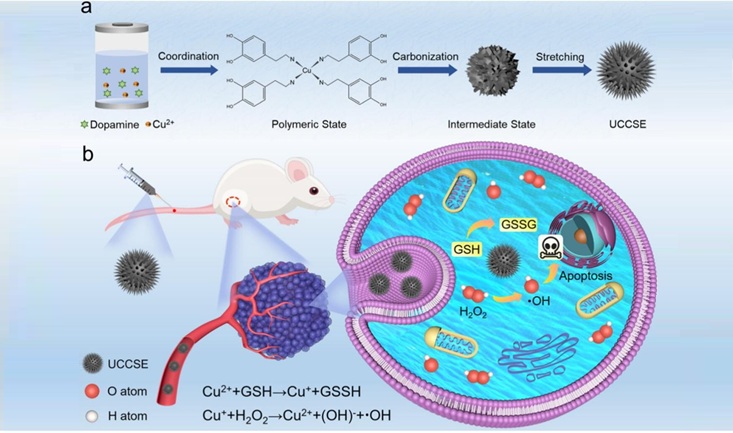
    A research team led by Prof. WANG Hui from the Hefei Institutes of Physical Science (HFIPS), Chinese Academy of Sciences (CAS), in collaboration with teams led by Prof. QIAN Junchao from HFIPS and Prof. Qu Songnan from the University of Macau, has successfully developed a novel low-coordination single-atom manganese nanozyme using a unique "molecular carbonization-reduction" strategy.
    Apr 30, 2025
  • Researchers Regulates Local Microenvironment of Ru Catalyst to Achieve Efficient Alkaline Hydrogen Oxidation Reaction
    Researchers Regulates Local Microenvironment of Ru Catalyst to Achieve Efficient Alkaline Hydrogen Oxidation Reaction
    A team of researchers from the High Magnetic Field Laboratory at the Hefei Institutes of Physical Science of the Chinese Academy of Sciences introduces an innovative method to optimize the performance of ruthenium (Ru) catalysts—offering a cost-effective and efficient alternative to platinum (Pt), which is commonly used in hydrogen oxidation reaction (HOR) catalysts but is expensive and scarce.
    Apr 29, 2025
  • Researchers Propose Novel Spin-Valve Mechanism Using Kagome Quantum Magnets
    Researchers Propose Novel Spin-Valve Mechanism Using Kagome Quantum Magnets
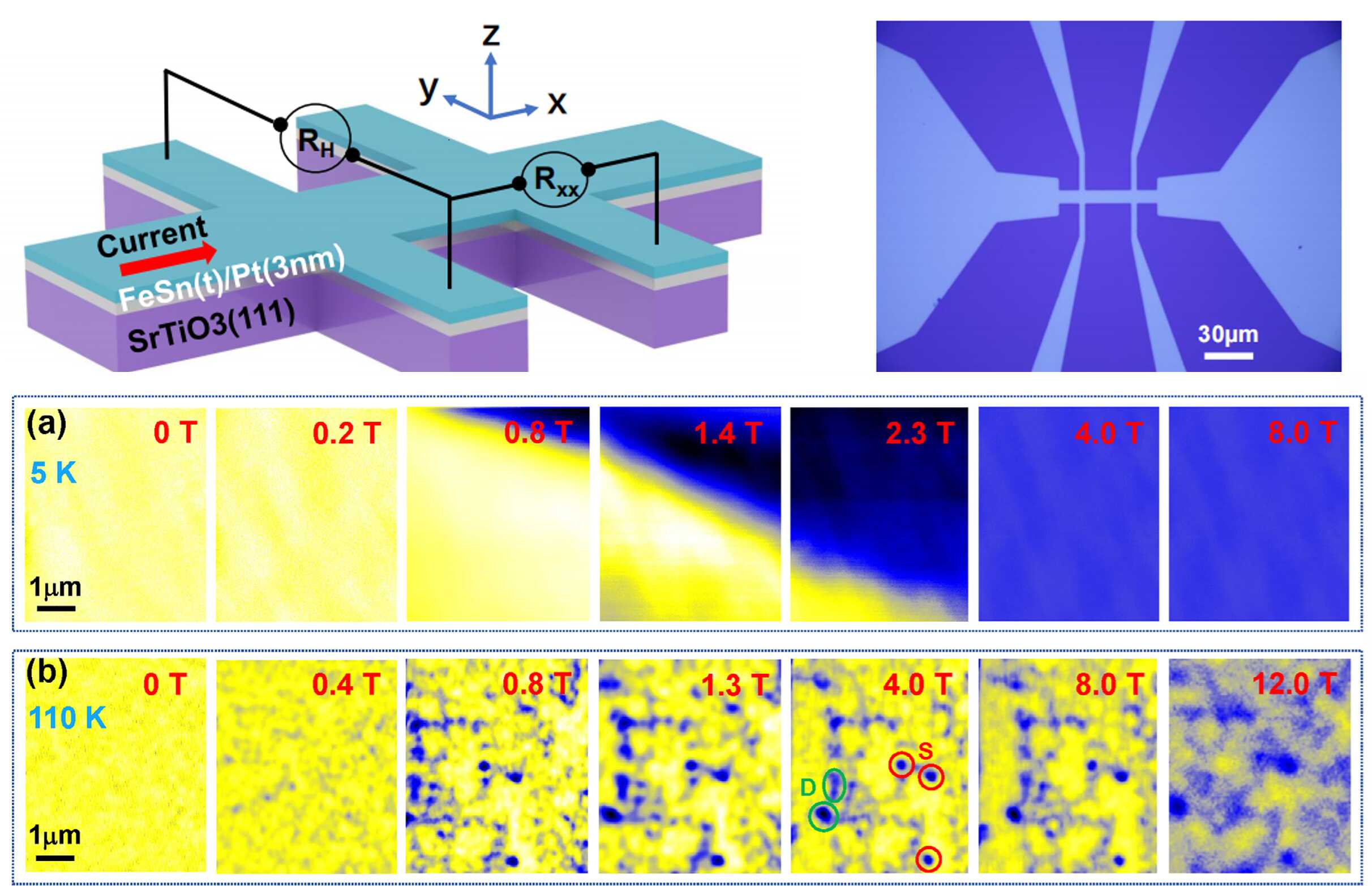
    Recently, a group of researchers led by Prof. QU Zhe from the Hefei Institutes of Physical Science of the Chinese Academy of Sciences, together with Prof. CHANG Tay-Rong from National Cheng Kung University has discovered a novel way to achieve spin-valve effects using kagome quantum magnets.
    Mar 28, 2025
  • New Strategy Developed to Engineer High-Affinity Receptor-Containing Antibodies Against Malaria
    New Strategy Developed to Engineer High-Affinity Receptor-Containing Antibodies Against Malaria
    In a recent study published in Science China Life Sciences, a research team led by WANG Junfeng at the Hefei Institutes of Physical Science of the Chinese Academy of Sciences introduced an innovative approach to developing high-affinity receptor-containing antibodies in vitro, offering a promising strategy to combat malaria.
    Mar 28, 2025
  • Biomimetic Magnetic Resonance Imaging Nanoprobe Developed for Early Detection of Liver Fibrosis in Non-Alcoholic Fatty Liver Disease
    Biomimetic Magnetic Resonance Imaging Nanoprobe Developed for Early Detection of Liver Fibrosis in Non-Alcoholic Fatty Liver Disease
    Recently, a research team led by Prof. WANG Junfeng at the High Magnetic Field Laboratory, the Hefei Institutes of Physical Science of the Chinese Academy of Sciences, has developed an innovative biomimetic dual-mode magnetic resonance imaging (MRI) nanoprobe for detecting early-stage liver fibrosis in non-alcoholic fatty liver disease (NAFLD).
    Mar 25, 2025
  • New Study Reveals Mechanism of SUMOylation in Regulating DNA Damage Repair and Radiotherapy Sensitivity
    New Study Reveals Mechanism of SUMOylation in Regulating DNA Damage Repair and Radiotherapy Sensitivity
    A research team led by Professor ZHAO Guoping at the Hefei Institutes of Physical Science of the Chinese Academy of Sciences, has unveiled a crucial mechanism that helps regulate DNA damage repair, with important implications for improving cancer treatment outcomes.
    Mar 25, 2025
  • SHMFF Users Realize Record-High Electrostrain in Lead-Free Piezoceramics
    SHMFF Users Realize Record-High Electrostrain in Lead-Free Piezoceramics
    Taking advantage of the electron spin resonance (ESR) spectrometer at the Steady High Magnetic Field Experimental Facility (SHMFF), researchers from Tsinghua University, in collaboration with Beijing Institute of Technology, the University of Wollongong (Australia), and the Hefei Institutes of Physical Science of the Chinese Academy of Sciences, have achieved ultrahigh piezoelectric strain of 1.9% in (K,Na)NbO3 (KNN) lead-free piezoelectric ceramics.
    Mar 06, 2025
  • Study Reveals Impact of Iron Metabolism and Redox Imbalances on Magnetic Susceptibility in Mice
    Study Reveals Impact of Iron Metabolism and Redox Imbalances on Magnetic Susceptibility in Mice
    A research team led by Prof. ZHANG Xin from High Magnetic Field laboratory, the Hefei Institutes of Physical Science of the Chinese Academy of Sciences, has revealed how magnetic properties vary in mice under different physiological and pathological conditions.
    Feb 27, 2025
  • Researchers Report the First Experimental Observation of Bose–Einstein Condensation of a Two-Magnon Bound State in a Spin-1 Triangular Lattice
    Researchers Report the First Experimental Observation of Bose–Einstein Condensation of a Two-Magnon Bound State in a Spin-1 Triangular Lattice
    Using the Multi-frequency High Field Electron Spin Resonance Spectrometer at the Steady-State High Magnetic Field Facility (SHMFF) in the Hefei Institutes of Physical Science of the Chinese Academy of Sciences, a research team from Southern University of Science and Technology, Zhejiang University, Renmin University of China, and the Australian Nuclear Science and Technology Organization observed the first-ever Bose-Einstein condensation (BEC) of a two-magnon bound state in a magnetic material.
    Feb 25, 2025
PREV12
MORE

Copyright © 2002 - Chinese Academy of Sciences

Address: No.52 Sanlihe Road, Beijing ,100864