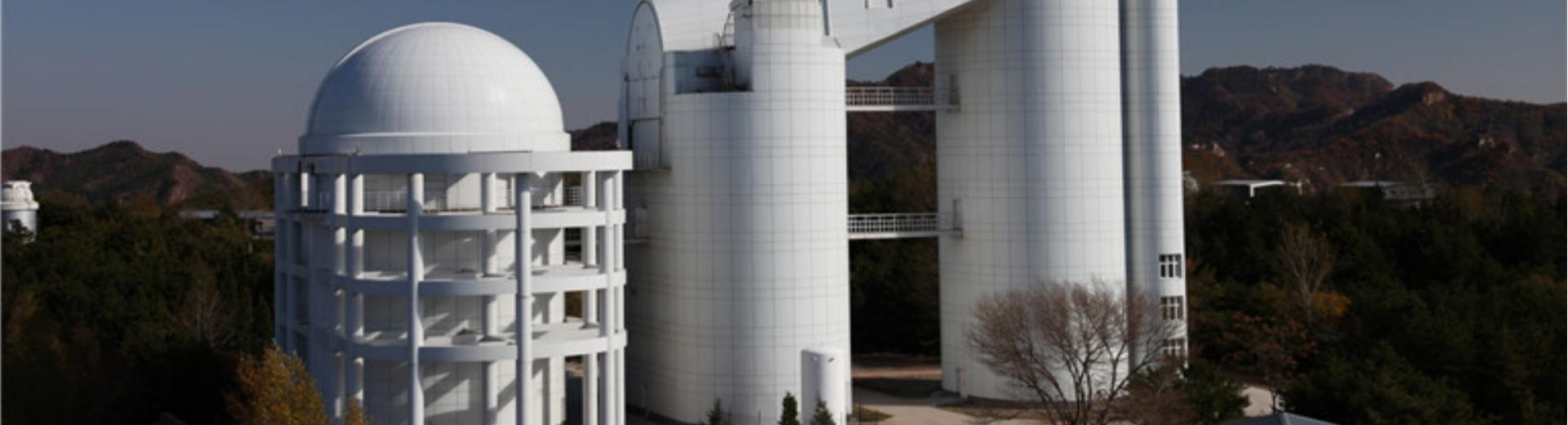
LAMOST optical system consists of a reflecting Schmidt Ma at the northern end, a spherical primary mirror Mb at the southern end and a focal surface in between. Mb has a size of 6.67m×6.05m, which consists of 37 hexagonal spherical sub-mirrors, each of them having a diagonal diameter of 1.1m and a thickness of 75mm. Ma is 5.72m×4.40m, which consists of 24 hexagonal plane sub-mirrors, each of them having a diagonal diameter of 1.1m and a thickness of 25 mm. Both the primary mirror and the focal surface are fixed on their ground bases, and the reflecting corrector tracks the motion of celestial objects. Hence, the celestial objects are observed around their meridian passages. As shown in figure 2, the light collected is reflected from Ma to Mb, again reflected by Mb and forms image of the observed sky on the focal surface. The light of individual objects is fed into the front ends of optical fibers accurately positioned on the focal surface, and then transferred into the spectrographs fixed in the room underneath, to be dispersed into spectra and recorded on the CCD detectors, respectively and simultaneously. The overall concept and key technical innovations makes it a unique astronomical instrument in combining a large aperture with a wide field of view. The available large focal surface accommodates up to 4000 fibers, by which the collected light of distant and faint celestial objects down to 20.5 magnitudes is fed into the spectrographs, promising a very high spectrum acquiring rate of several ten-thousands of spectra per night.
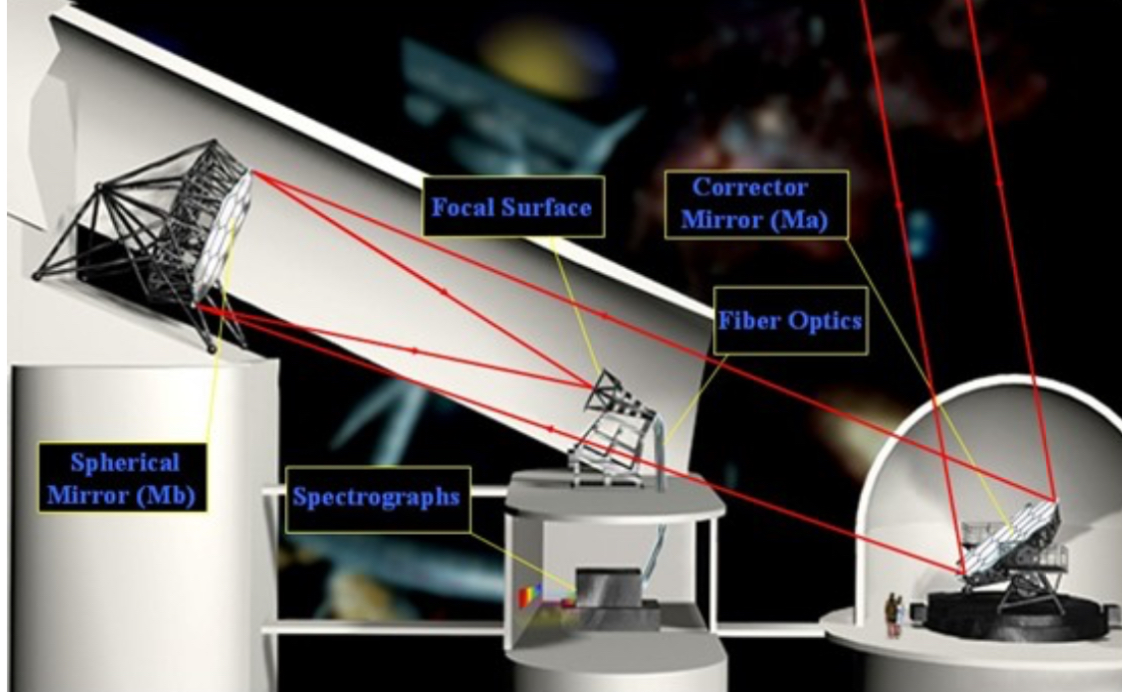
Figure 1, The overall struture of LAMOST

