Log in Sign up 中文
English
  • Home
  • About
  • Facilities
    • Material
    • Earth System and Environment
    • Engineering Technology
    • Space and Astronomy
    • Particle and Nuclear Physics
    • Energy
    • Biology
  • News
    • News & Updates
    • Research Highlights
  • Notice
  • User Portal
  • Home
  • Facilities
    • Material
    • Earth System and Environment
    • Engineering Technology
    • Space and Astronomy
    • Particle and Nuclear Physics
    • Energy
    • Biology
  • News
    • News & Updates
    • Research Highlights
  • Notice
  • User Portal

Guoshoujing Telescope (LAMOST)

  1. Home>Facilities>Space and Astronomy>Guoshoujing Telescope (LAMOST)>News
  • News
  • Notice
  • Equipment
  • Contact
  • Data Resource
News
  • Researchers Discover Chemical Evidence for Pair-instability Supernova from A Very Massive First Star
    Researchers Discover Chemical Evidence for Pair-instability Supernova from A Very Massive First Star
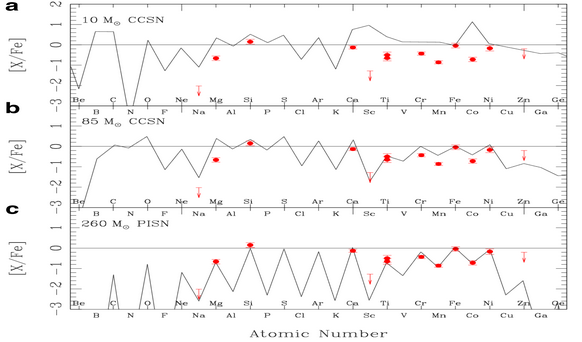
    A new study led by Prof. ZHAO Gang from the NAOC has identified a chemically peculiar star (LAMOST J1010+2358) in the Galactic halo as clear evidence of the existence of PISNe from very massive first stars in the early Universe, based on the LAMOST survey and follow up high resolution spectra observation by Subaru Telescope. It has been confirmed that this star was formed in the gas cloud dominated by the yields of a PISN with 260 solar masses.
    Jun 13, 2025
  • "Motion picture" View of the Warped Milky Way Reveals the Shape of its Dark Matter Halo
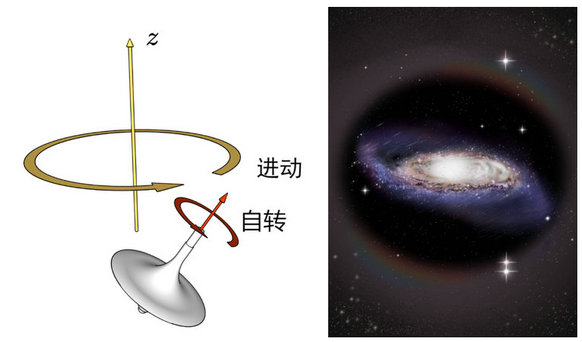
    A Chinese research team led by Dr. HUANG Yang, an associate Professor from the National Astronomical Observatories of the Chinese Academy of Sciences (NAOC) & University of the Chinese Academy of Sciences (UCAS), pioneered the "Motion picture" method for measuring the precession rate of the Milky Way's disk warp.
    Jun 13, 2025
  • Discovery of Long-hidden Small Black Hole in Unusually Evolved Binary System
    Discovery of Long-hidden Small Black Hole in Unusually Evolved Binary System
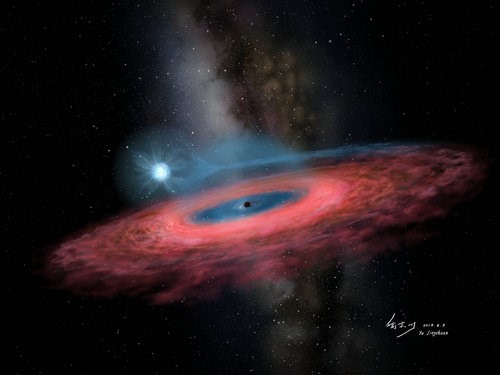
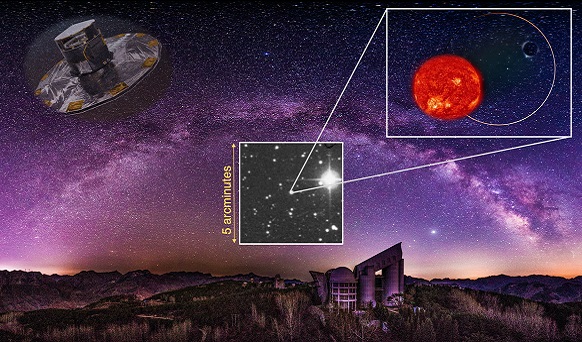
    Chinese researchers have discovered a promising mass-gap black hole using the radial velocity and astrometry methods. The study has been published online in Nature Astronomy on Sept. 10, and was conducted by a team led by Dr. WANG Song, an associate researcher from the National Astronomical Observatories of the Chinese Academy of Sciences (NAOC).
    Jun 13, 2025
PREV12
MORE

Copyright © 2002 - Chinese Academy of Sciences

Address: No.52 Sanlihe Road, Beijing ,100864