
On January 21st,the 4th Meeting of the 1st Science and Technology Committee for National Major Science and Technology Infrastructure,specifically focusing on the China Remote Sensing Satellite Ground Station and the Chinese Aeronautic Remote Sensing System,was convened in Beijing.
Academician GuoHuadong of the Chinese Academy of Sciences and Director of the Science and Technology Committee, as well as Zhang Bing, Vice President of the Aerospace Information Research Institute (AIR) under the Chinese Academy of Sciences, attended the meeting. The meeting was chaired by Dang Yawen, Deputy Director of the Science and Technology Department at AIR. Fifteen committee representatives from 13 institutions, including AIR, the Land Satellite Remote Sensing Application Center of the Ministry of Natural Resources, and the Satellite Environment Application Center of the Ministry of Ecology and Environment, participated in the gathering.
During the opening ceremony,Zhang Bing extended a warm welcome to the experts of the Science and Technology Committee and highlighted the remarkable achievements made by the national major science and technology infrastructure in recent years. He expressed his hope that the committee members would provide more valuable insights for the further development of these facilities.
Subsequently, Huang Peng, Director of the China Remote Sensing Satellite Ground Station, Wei Hongwei, a Senior Engineer at the Ground Station, and Pan Jie, Director of the Aerial Remote Sensing Center, presented special reports on the 2025 operational plan for the China Remote Sensing Satellite Ground Station, the expansion of the receiving capacity of the receiving station network, and the 2025 operational plan for the Aerial Remote Sensing System (including Remote Sensing Aircraft). These reports primarily covered the operational status of the facilities, the main tasks to be undertaken, and talent cultivation efforts.
Following the presentations,Guo Huadong organized discussions on the current operational status of the two major scientific installations, the significant scientific questions to be addressed in the next 3-5 years, the planned work surrounding these questions, the goals and indicators for operational maintenance, as well as the indicators and requirements for open sharing. The meeting adopted the evaluation opinions on the 2025 operational plan for the Ground Station, the expansion of its receiving capacity, and the 2025 operational plan for the Chinese Aeronautic Remote Sensing System.
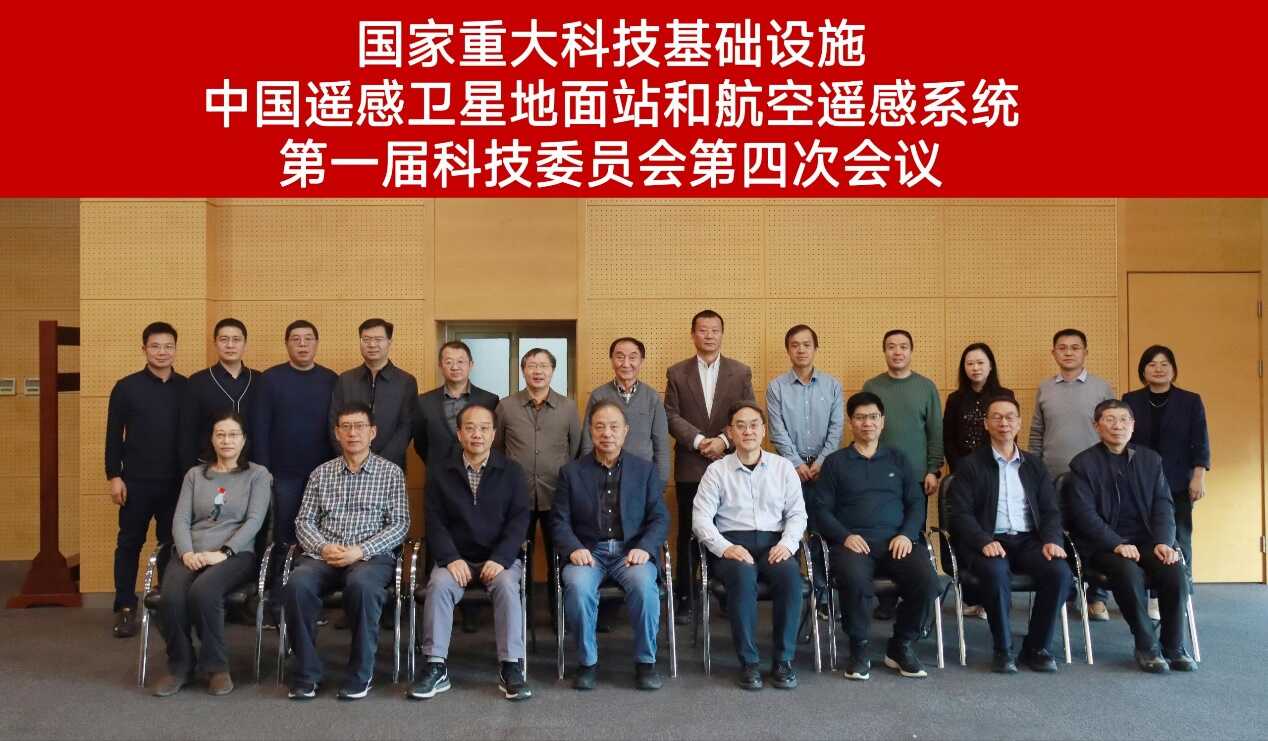
A group photo of the meeting
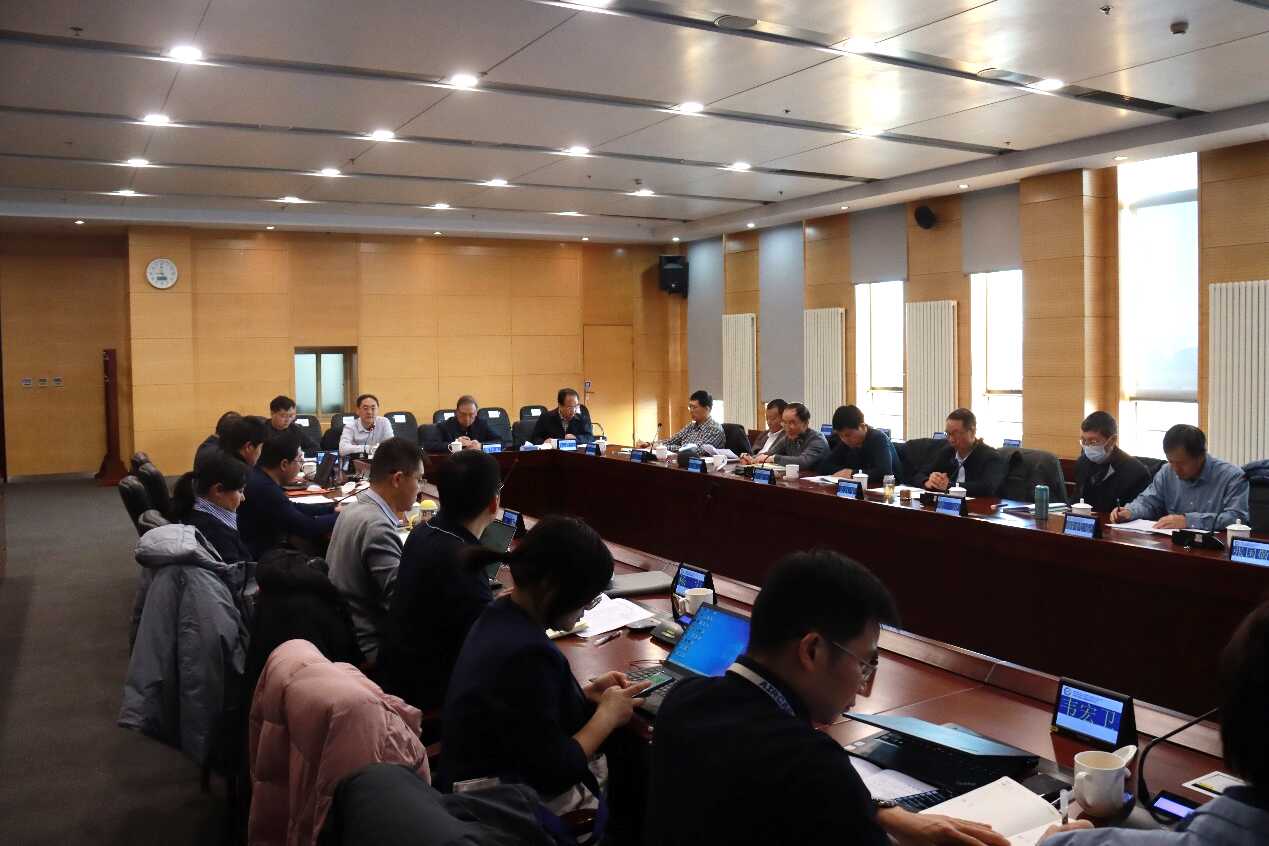
The scene of reporting and exchange
