Log in Sign up 中文
English
  • Home
  • About
  • Facilities
    • Material
    • Earth System and Environment
    • Engineering Technology
    • Space and Astronomy
    • Particle and Nuclear Physics
    • Energy
    • Biology
  • News
    • News & Updates
    • Research Highlights
  • Notice
  • User Portal
  • Home
  • Facilities
    • Material
    • Earth System and Environment
    • Engineering Technology
    • Space and Astronomy
    • Particle and Nuclear Physics
    • Energy
    • Biology
  • News
    • News & Updates
    • Research Highlights
  • Notice
  • User Portal

Five-hundred-meter Aperture Spherical radio Telescope (FAST)

  1. Home>Facilities>Space and Astronomy>Five-hundred-meter Aperture Spherical radio Telescope (FAST)>News
  • News
  • Notice
  • Equipment
  • Contact
  • Data Resource
News
  • Frequency-dependent Polarization of Repeating Fast Radio Bursts Reveals Their Origin
    Frequency-dependent Polarization of Repeating Fast Radio Bursts Reveals Their Origin
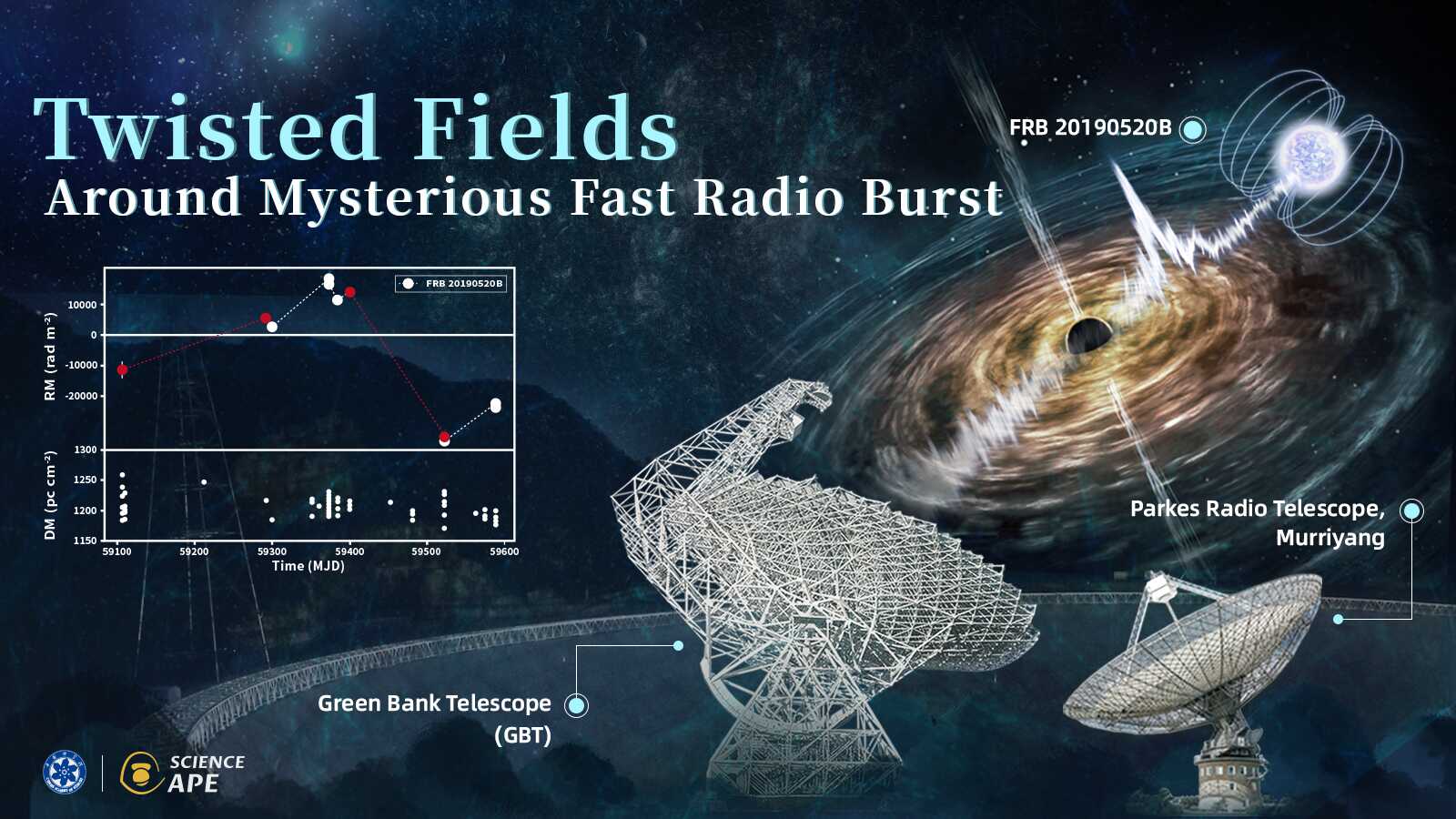
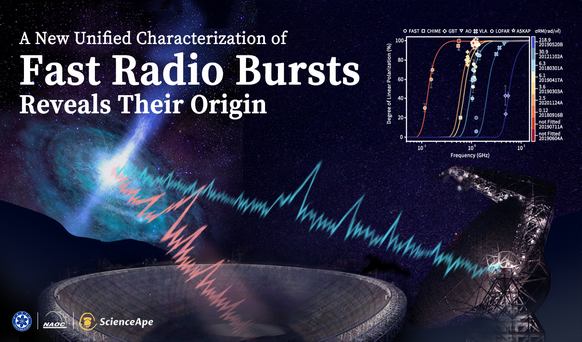
    The research team analyzed the observational data of FAST and GBT (the Green Bank Telescope). A mechanism that can uniformly explain the polarization frequency evolution of repeating FRB is proposed for the first time. Based on this, a single parameter, "RM dispersion", which can describe the surrounding environment of the FRBs is derived. This mechanism supports the repeating FRB in a complex ionizing environment which is similar to supernova remnants. The possible evolution stage of FRBs is determined by polarization observation, which provides key observational evidence for the origin of the FRBs. The greater the "RM dispersion" of the FRB, the more change of its surrounding environment. Therefore, it is also likely to be younger, which has the potential to become an "ID card" to identify repeating bursts. The results were published in Science on March 18.
    Mar 17, 2022
  • FAST Detects Coherent Interstellar Magnetic Field with a Technique Conceived at Arecibo
    FAST Detects Coherent Interstellar Magnetic Field with a Technique Conceived at Arecibo
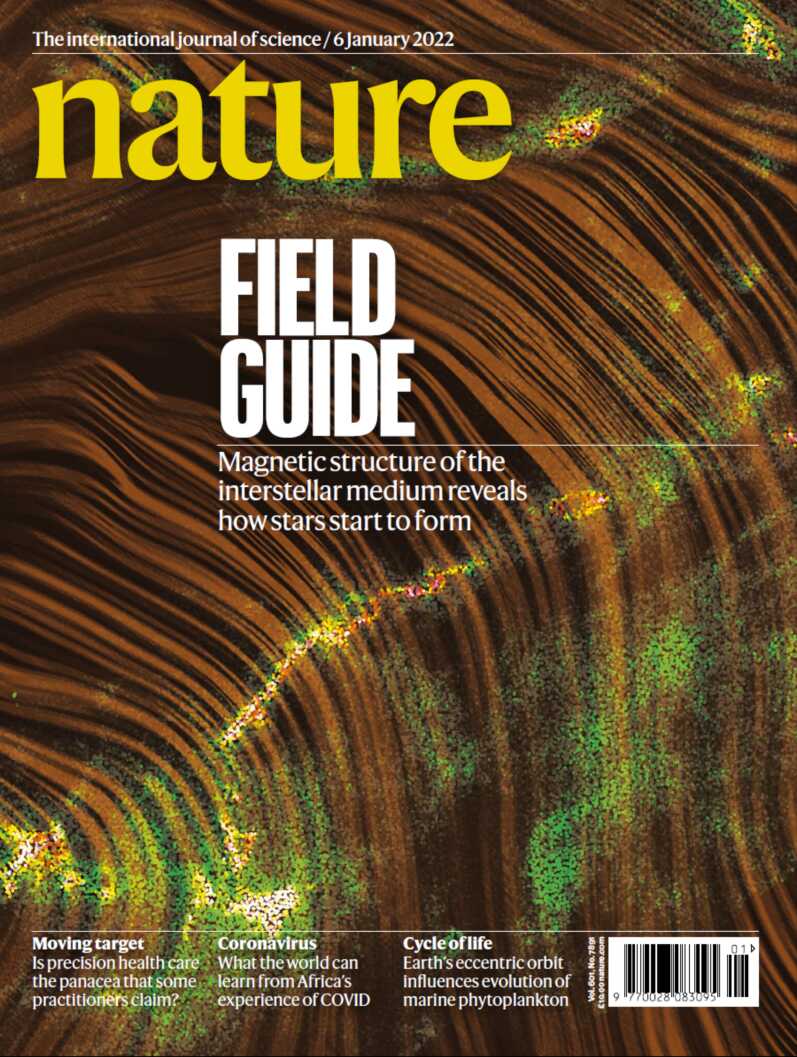
    Neutral hydrogen is the most abundant element in the universe. It widely exists in different periods of the universe and is one of the best tracers for the distribution of matter at different scales. The research team adopted the original neutral hydrogen narrow line self-absorption method. For the first time, they obtained the high confidence Zeeman effect measurements from a proto-star envelope. They found that the interstellar medium has a coherent magnetic field structure from cold neutral gas to proto-star. It is different from the prediction of standard model. It provides important observational evidence for solving the "magnetic flux problem", one of the three classic problems of star formation. This achievement was published in the form of a cover article in Nature on January 6.
    Nov 30, 2021
  • Over A Thousand Cosmic Explosions in 47 days Detected by FAST
    Over A Thousand Cosmic Explosions in 47 days Detected by FAST
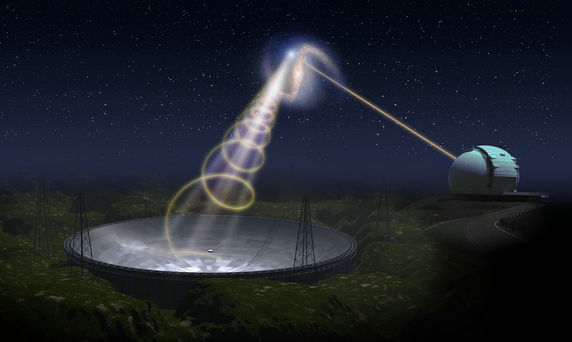
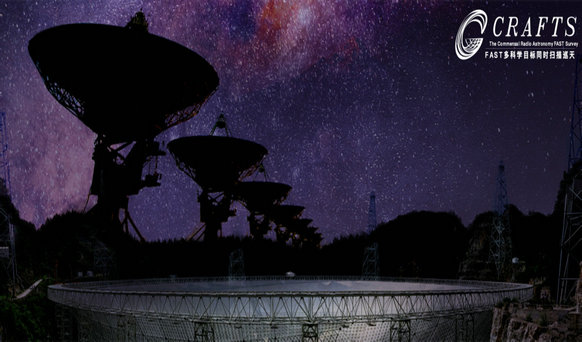
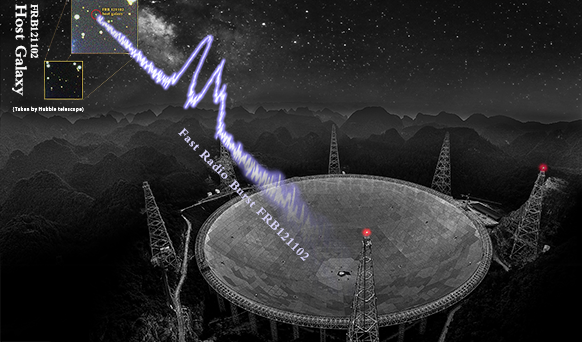
    Fast radio bursts (FRB) are the brightest radio bursts in the universe. Its origin is unknown and it is the latest hot spot in astronomy. The research team used FAST to observe FRB121102. They detected 1652 FRBS in about 50 days. It has obtained the largest sample of rapid radio burst events so far. The number exceeds the sum of previous FRB events in this field. They have revealed the complete energy spectrum and double-peak structure of FRBs for the first time. The paper was published in Nature in October 2021. At least 6 new FRBs have been found in the Commensal Radio Astronomy FAST Survey(CRAFTS). It is making a unique contribution in revealing the mechanism of this mysterious phenomenon (FRB) in the universe and promoting this new field of astronomy.
    Sep 09, 2021
PREV12
MORE

Copyright © 2002 - Chinese Academy of Sciences

Address: No.52 Sanlihe Road, Beijing ,100864