Log in Sign up 中文
English
  • Home
  • About
  • Facilities
    • Material
    • Earth System and Environment
    • Engineering Technology
    • Space and Astronomy
    • Particle and Nuclear Physics
    • Energy
    • Biology
  • News
    • News & Updates
    • Research Highlights
  • Notice
  • User Portal
  • Home
  • Facilities
    • Material
    • Earth System and Environment
    • Engineering Technology
    • Space and Astronomy
    • Particle and Nuclear Physics
    • Energy
    • Biology
  • News
    • News & Updates
    • Research Highlights
  • Notice
  • User Portal

News

  1. Home>News>Research Highlights
  • News & Updates
  • Research Highlights
Research Highlights
  • Researchers Achieve 7-30 THz Continuously Tunable Strong-Field Terahertz Free-Electron Lasers
    Researchers Achieve 7-30 THz Continuously Tunable Strong-Field Terahertz Free-Electron Lasers
    In a study published in Nature Photonics,the Free-electron Laser Team of the Shanghai Advanced Research Institute (SARI),Chinese Academy of Sciences developed an innovative approach by employing beating-frequency laser modulation of electron beams to precisely tailor the beam structure and produce continuously tunable THz radiation.
    Oct 21, 2025
  • Shenguagn II Research Team Makes New Progress in High-Resolution Laser Pulse Temporal Shaping Technology
    Shenguagn II Research Team Makes New Progress in High-Resolution Laser Pulse Temporal Shaping Technology
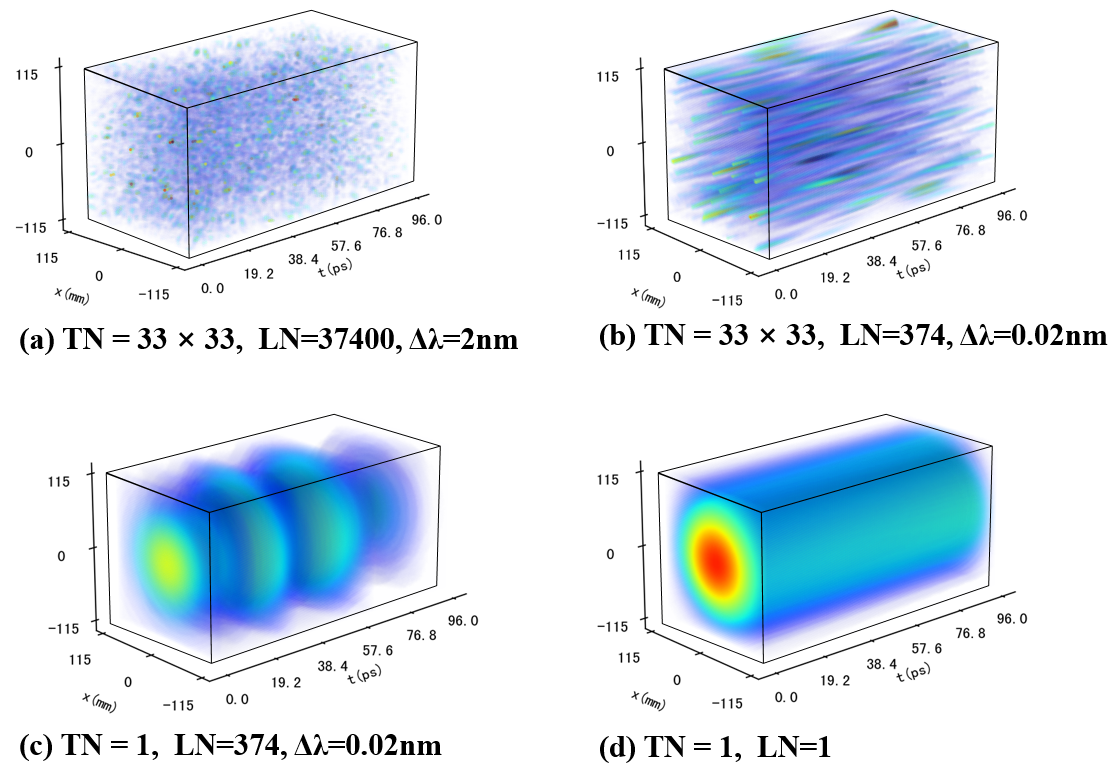
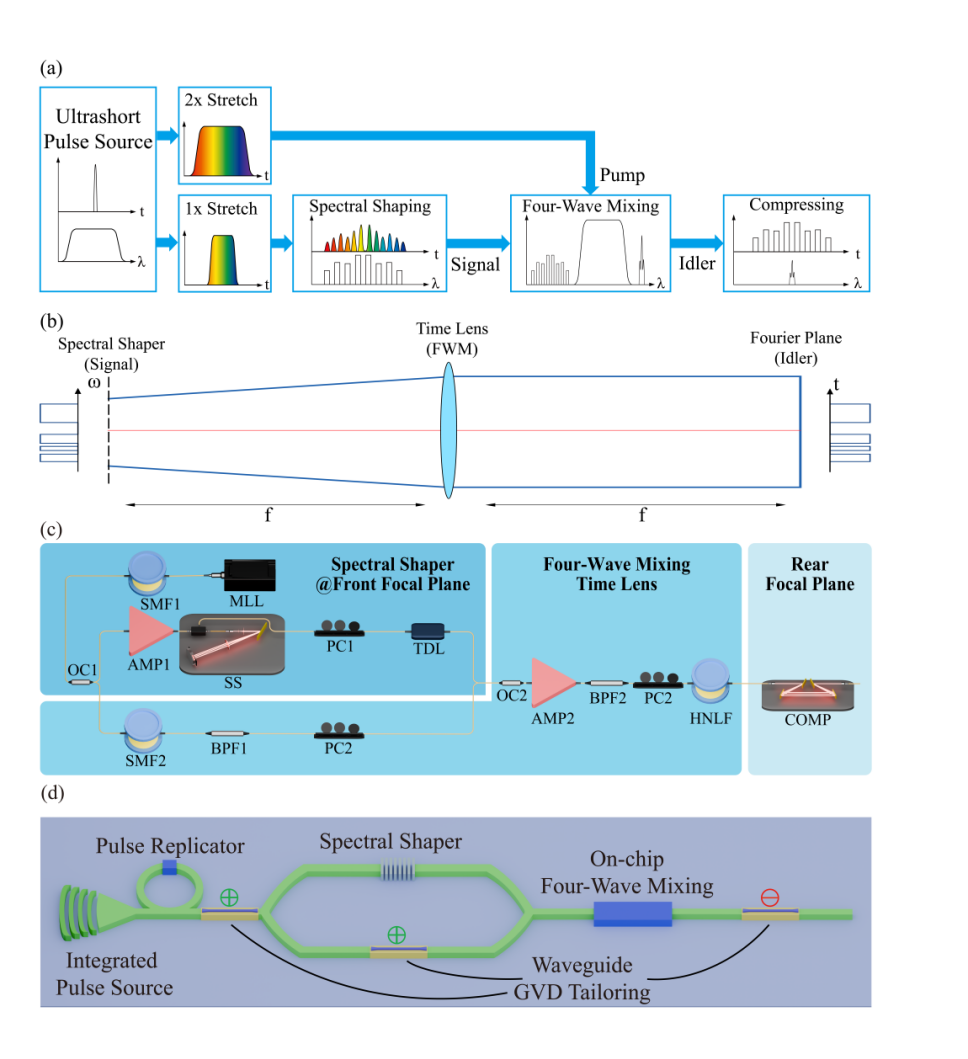
    At the Shenguang-II Facility, researchers have innovatively developed an arbitrary temporal pulse shaping technique utilizing optical waveguide four-wave mixing for high-resolution laser pulse control.
    Oct 20, 2025
  • Study Reveals Biological Effects of High Magnetic Fields on Magnetotactic Bacteria
    Study Reveals Biological Effects of High Magnetic Fields on Magnetotactic Bacteria
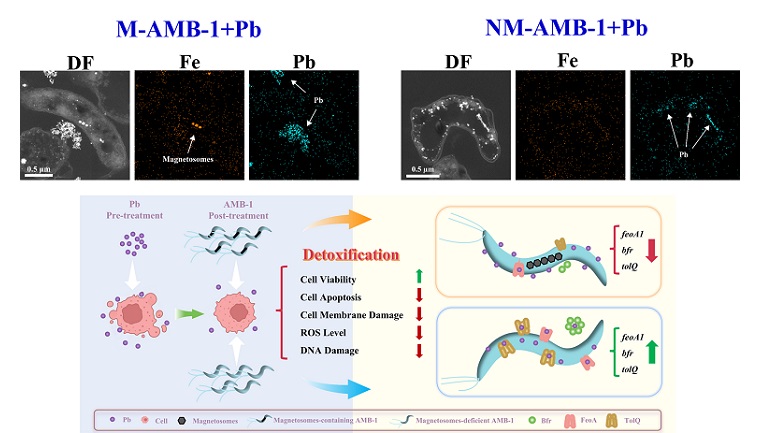
    Recently, the research group led by Dr. WANG Junfeng at the High Magnetic Field Laboratory, the Hefei Institutes of Physical Science of the Chinese Academy of Sciences, revealed significant physiological and molecular effects of a 7 T strong magnetic field on magnetotactic bacteria, based on experiments conducted with the laboratory' s superconducting magnet platform.
    Sep 30, 2025
  • 44.86 T Magnetic Field Achieved with
    44.86 T Magnetic Field Achieved with "Pocket-Type" High-temperature Superconducting Coil
    Recently, a research team led by KUANG Guangli and JIANG Donghui from the High Magnetic Field Laboratory of the Hefei Institutes of Physical Science, Chinese Academy of Sciences (CHMFL), successfully developed a “pocket-type” high-temperature superconducting (HTS) coil. The coil, wound with domestically produced REBa₂Cu₃O₇₋ₓ (REBCO) tapes, generated 28.20 T at zero field in a liquid helium bath and produced an additional 10.36 T inside the 34.5 T steady-state magnetic field of the WM5 water-cooled magnet. Together, the system achieved a record combined magnetic field of 44.86 T.
    Sep 28, 2025
  • Record-Setting Iron-Based Superconducting Wires Achieved with CHMFL Support
    Record-Setting Iron-Based Superconducting Wires Achieved with CHMFL Support
    A collaborated research team led by Prof. MA Yanwei from the Institute of Electrical Engineering (IEE) of Chinese Academy of Sciences (CAS), has shattered records in the current-carrying performance of iron-based superconducting wires.
    Sep 10, 2025
  • ​New Study Shows How Ancient Climates May Inform Monsoon Prediction
    ​New Study Shows How Ancient Climates May Inform Monsoon Prediction
    The South Asian Summer Monsoon (SASM) is the world’s most significant monsoon system, providing approximately 80% of the region's annual rainfall—influencing agriculture, water security, and the livelihoods of over a billion people across the Indian Peninsula, the western Indochina Peninsula, and the southern Qinghai-,a recent study published in Nature seeks to address this contradiction by exploring how the SASM responds to warming under six climate scenarios, spanning from the past to the future. Led by researchers from the Institute of Atmospheric Physics at the Chinese Academy of Sciences, the study develops a unified framework based on thermodynamic (moisture-driven) and dynamic (wind-driven) processes that govern changes in the SASM, suggesting that insights from past warm climates can inform our understanding of the future SASM.
    Sep 10, 2025
  • Deep Sea Worm Fights 'Poison with Poison' to Survive High Arsenic and Sulfide Levels
    Deep Sea Worm Fights 'Poison with Poison' to Survive High Arsenic and Sulfide Levels
    A deep sea worm that inhabits hydrothermal vents survives the high levels of toxic arsenic and sulfide in its environment by combining them in its cells to form a less hazardous mineral.
    Sep 02, 2025
  • SHMFF Users Reveal a New mechanism for Abnormal Voltage Attenuation of P2-type Layered Oxide Cathodes
    SHMFF Users Reveal a New mechanism for Abnormal Voltage Attenuation of P2-type Layered Oxide Cathodes
    A research team led by Prof. LI Chao from East China Normal University has uncovered the origin of voltage decay in P2-type layered oxide cathodes recently. Using electron paramagnetic resonance (EPR) spectroscopy at the Steady-State Strong Magnetic Field Facility (SHMFF), the Hefei Institutes of Physical Science of the Chinese Academy of Science, the team tracked the dynamic evolution of oxygen species and clarified their direct role in structural degradation.
    Sep 01, 2025
  • Research Progress at Shanghai Institute of Optics and Fine Mechanics on Anisotropic 3D Array Beam Splitting Control at Extremely Short Wavelengths
    Research Progress at Shanghai Institute of Optics and Fine Mechanics on Anisotropic 3D Array Beam Splitting Control at Extremely Short Wavelengths
    Recently, a joint research team from the High Power Laser Physics Joint Laboratory at the Shanghai Institute of Optics and Fine Mechanics, Chinese Academy of Sciences, collaborating with a team from Harbin Institute of Technology, has achieved anisotropic three-dimensional array beam splitting control at extremely short wavelengths.
    Aug 26, 2025
  • New Progress in Nanosecond-Scale Pulse Contrast Measurement for High-Power Laser Facilities on SG-II Infrastructure
    New Progress in Nanosecond-Scale Pulse Contrast Measurement for High-Power Laser Facilities on SG-II Infrastructure
    The research team innovatively proposed and experimentally validated a nanosecond-scale pulse contrast measurement method based on laser filamentation in water. This technique utilizes nonlinear optical attenuation generated by the laser-matter interaction to effectively protect the photodiode, achieving up to 40-fold attenuation of the main pulse without affecting low-intensity prepulses.
    Aug 25, 2025
PREV12345NEXT
MORE

Copyright © 2002 - Chinese Academy of Sciences

Address: No.52 Sanlihe Road, Beijing ,100864