Log in Sign up 中文
English
  • Home
  • About
  • Facilities
    • Material
    • Earth System and Environment
    • Engineering Technology
    • Space and Astronomy
    • Particle and Nuclear Physics
    • Energy
    • Biology
  • News
    • News & Updates
    • Research Highlights
  • Notice
  • User Portal
  • Home
  • Facilities
    • Material
    • Earth System and Environment
    • Engineering Technology
    • Space and Astronomy
    • Particle and Nuclear Physics
    • Energy
    • Biology
  • News
    • News & Updates
    • Research Highlights
  • Notice
  • User Portal

Multi-Purpose Oceanographic Research Vessel (MORV)

  1. Home>Facilities>Earth System and Environment>Multi-Purpose Oceanographic Research Vessel (MORV)>News
  • News
  • Notice
  • Equipment
  • Contact
  • Data Resource
News
  • Researchers Reveal How Supergiant Deep-Sea Isopods Survive Years Without Food
    Researchers Reveal How Supergiant Deep-Sea Isopods Survive Years Without Food
    The supergiant bathynomid is a deep-sea isopod famous for surviving more than five years without food. A research team from the Institute of Oceanology has uncovered the mechanisms enabling these deep-sea supergiants to thrive under extreme nutritional constraints.
    The supergiant bathynomid is a deep-sea isopod famous for surviving more than five years without food. Despite residing in an extremely low-nutrient habitat, these organisms exhibit pronounced body gigantism, a trait that requires substantial energy. This raises an energy paradox: How do these apparently energy-hungry isopods sustain their enormous size given the sporadic availability of food i...
    Jun 25, 2026
  • Study Reveals How Deep-sea Methanogens Thrive in Phosphorus-starved Environments
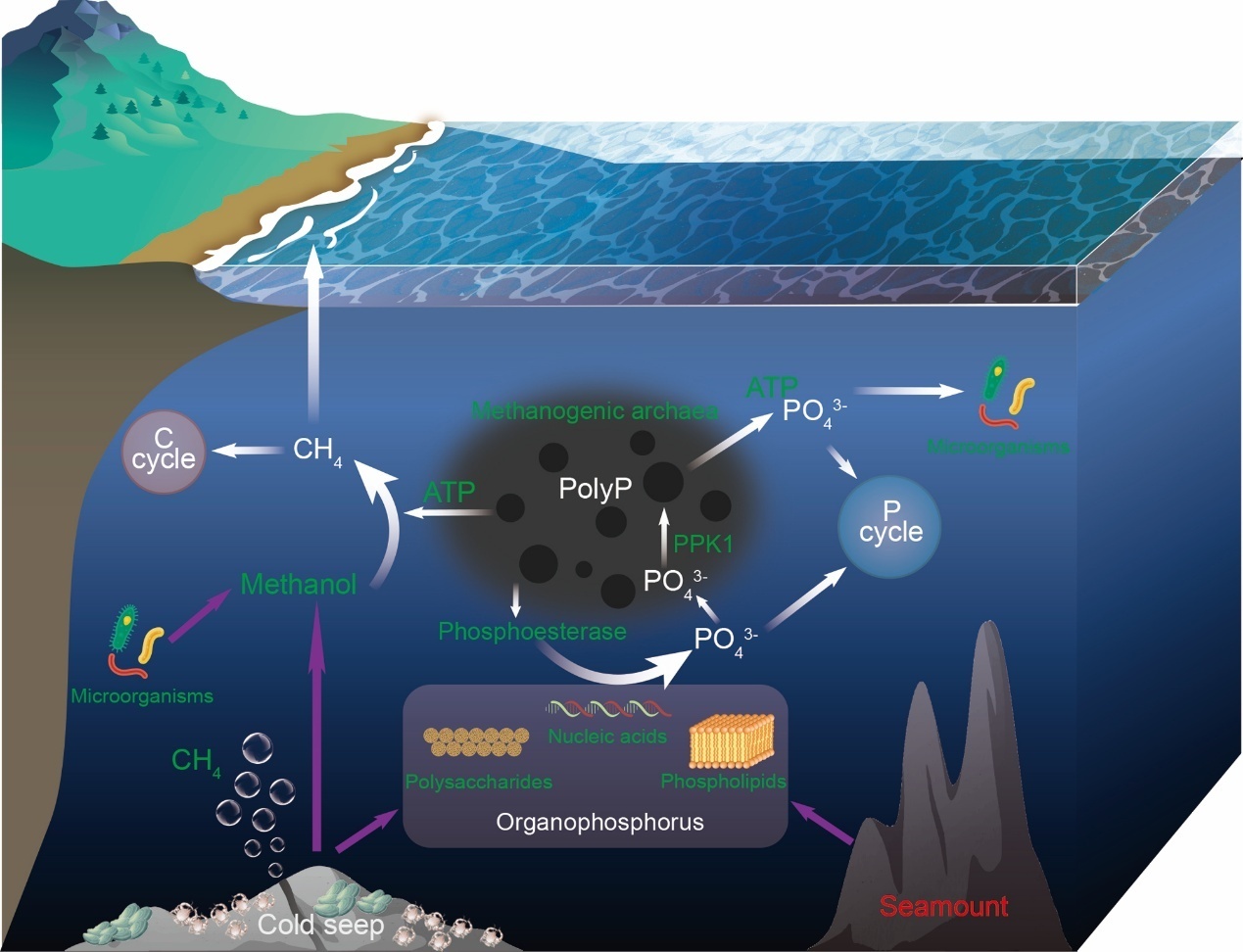
    Study Reveals How Deep-sea Methanogens Thrive in Phosphorus-starved Environments
    A research team led by Prof. SUN Chaomin from the Institute of Oceanology of the Chinese Academy of Sciences (IOCAS) has revealed that deep-sea methanogenic archaea efficiently utilize phosphorus and store energy through polyphosphate (polyP) metabolism.
    In deep-sea ecosystems, methanogenic archaea are key drivers of the global methane cycle, particularly in methane-rich cold seep environments. Phosphorus, an essential element for life, is typically utilized by microorganisms as inorganic phosphate. In the deep ocean, inorganic phosphorus is extremely scarce, while organic phosphorus is abundant in sediments. However, how methanogenic archaea m...
    Jun 23, 2026
  • Researchers Discover Seamounts Promote Expansion of Oxygen Minimum Zone in Western Pacific
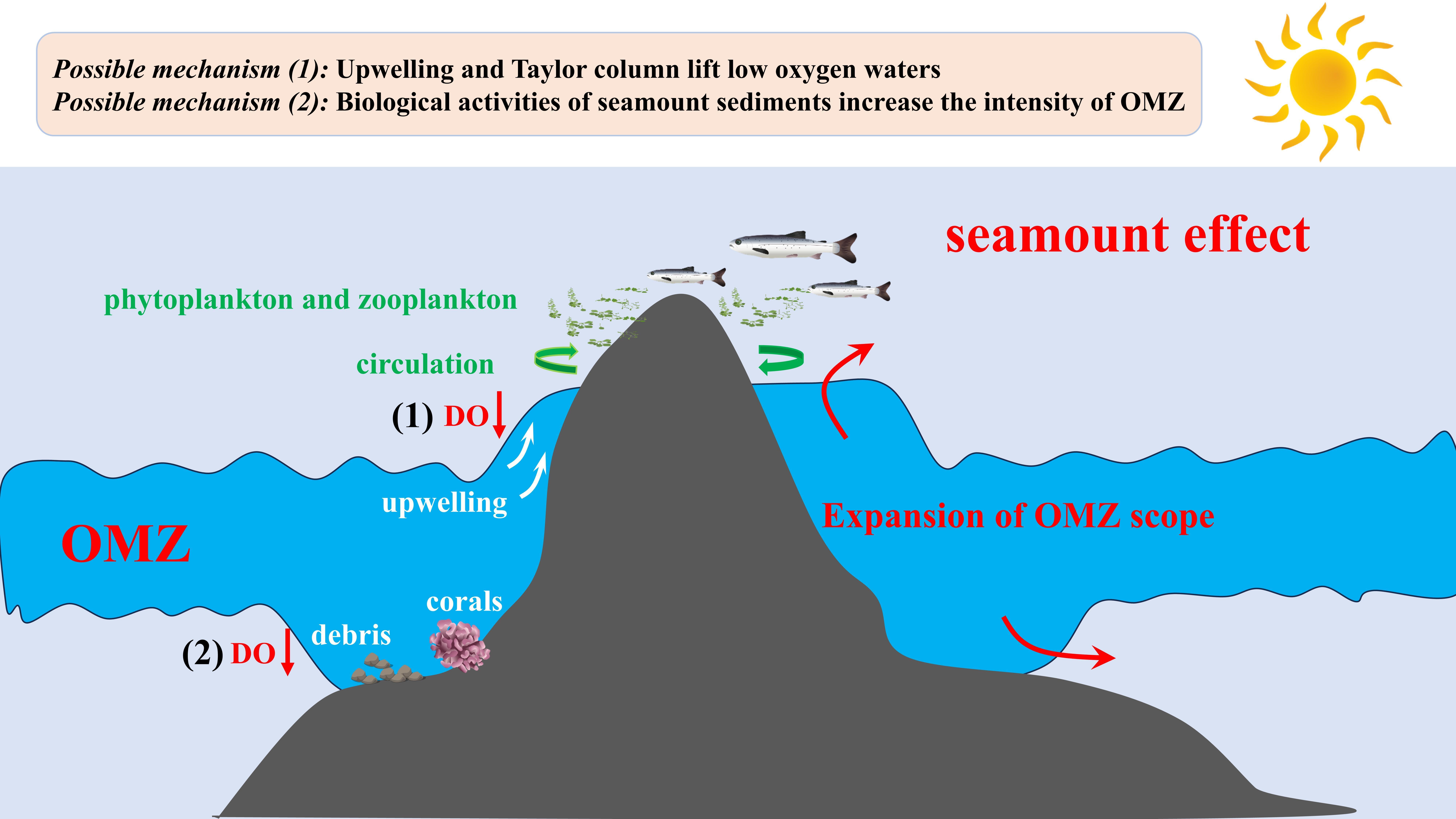
    Researchers Discover Seamounts Promote Expansion of Oxygen Minimum Zone in Western Pacific
    A research team led by Prof. SONG Jinming from the Institute of Oceanology of the Chinese Academy of Sciences clarified the differences in the "seamount effect" between two cruises on M4 seamount in the Western Pacific, and found that seamount promoted the expansion of the OMZ to a certain extent.
    Seamounts and the oxygen minimum zone (OMZ) are two typical habitats that often co-exist in the deep ocean. However, it remains unexplored and unverified whether the "seamount effect" alters OMZ structure based on marine stratification, thus impacting deep-sea hypoxic environment and carbon sink process.In a study published in Progress in Oceanography, a research team led by Prof. SONG Jinming ...
    Apr 30, 2026
  • Scientists Discover Methane Emissions from South China Sea Cold Seeps Far Exceed Previous Estimates
    Scientists Discover Methane Emissions from South China Sea Cold Seeps Far Exceed Previous Estimates
    Deep-sea cold seeps are key channels for seafloor methane, but quantifying their emissions has been challenging, creating uncertainties in the global ocean methane budget. To fill this knowledge gap, a research team from the Institute of Oceanology of the Chinese Academy of Sciences (IOCAS) has found that methane emissions from South China Sea cold seeps far exceed previous estimates, providing important scientific evidence for the accounting of oceanic greenhouse gas sources and sinks.
    Deep-sea cold seeps are key channels for seafloor methane, but quantifying their emissions has been challenging, creating uncertainties in the global ocean methane budget. To fill this knowledge gap, a research team from the Institute of Oceanology of the Chinese Academy of Sciences (IOCAS) has found that methane emissions from South China Sea cold seeps far exceed previous estimates, providing...
    Jan 22, 2026
  • Deep Sea Worm Fights 'Poison with Poison' to Survive High Arsenic and Sulfide Levels
    Deep Sea Worm Fights 'Poison with Poison' to Survive High Arsenic and Sulfide Levels
    A deep sea worm that inhabits hydrothermal vents survives the high levels of toxic arsenic and sulfide in its environment by combining them in its cells to form a less hazardous mineral.
    Source: EurekAlert!(https://sciencesources.eurekalert.org/news-releases/1095081)A deep sea worm that inhabits hydrothermal vents survives the high levels of toxic arsenic and sulfide in its environment by combining them in its cells to form a less hazardous mineral. Chaolun Li of the Institute of Oceanology,CAS,China,and colleagues report these findings in a new study published August 26th in t...
    Sep 02, 2025
  • Flying in the deep: Dumbo Octopus
    Flying in the deep: Dumbo Octopus
    In the azure waters of the Caroline Seamounts at a depth of 1240 meters, a red-orange dumbo octopus flutters through the water with its fins as wings.
    In the azure waters of the Caroline Seamounts at a depth of 1,240 meters, a red-orange dumbo octopus flutters through the water with its fins as wings. This marks the debut of the newly discovered "Grimpoteuthis feitiana", a beautiful fusion of science and myth.Its translucent body and soft, fluid arms resemble the graceful movements of feitian goddess from Chinese mythology, dancing with flutt...
    Aug 25, 2025
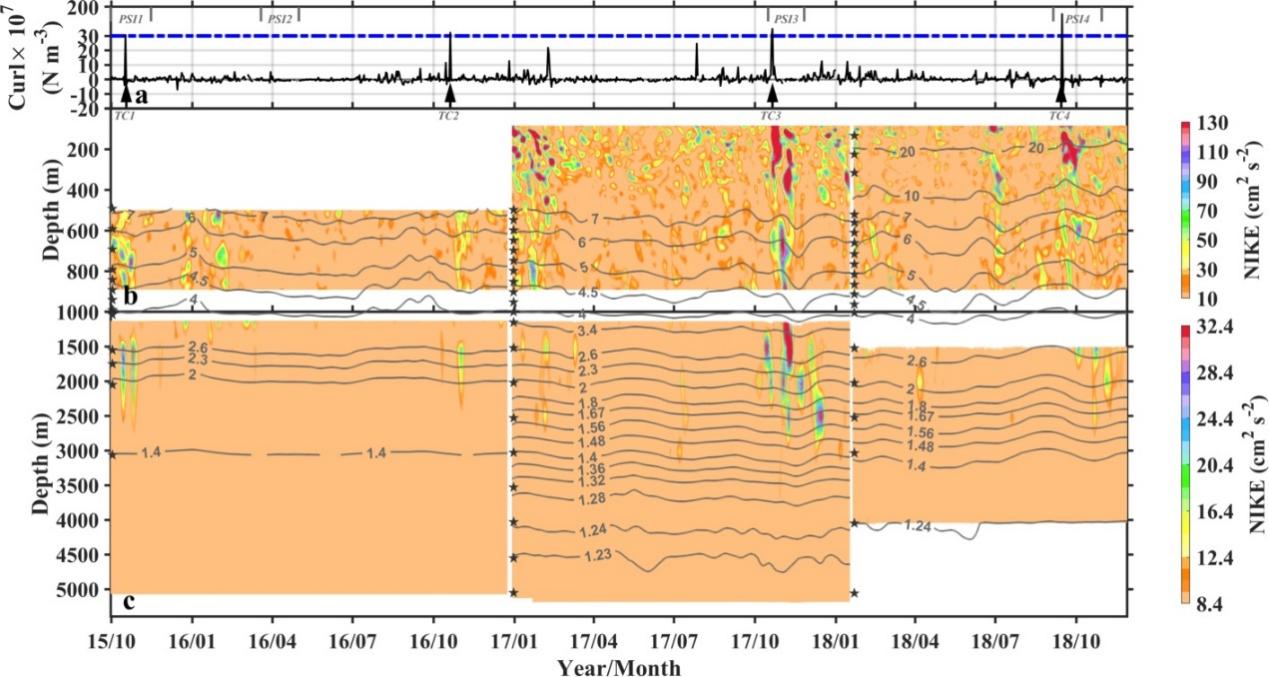
  • Study Reveals Generation Mechanism of Deep Near-Inertial Kinetic Energy
    Study Reveals Generation Mechanism of Deep Near-Inertial Kinetic Energy
    The near-inertial internal wave is a significant energy source for deep-sea mixing. However, the energy source of deep near-inertial internal waves remains largely unknown. Recently, the research team led by Prof. WANG Fan from the Institute of Oceanology of the Chinese Academy of Sciences (IOCAS) has made new progress in the study of the generation mechanism of deep near-inertial kinetic energy.
    The near-inertial internal wave is a significant energy source for deep-sea mixing. However,the energy source of deep near-inertial internal waves remains largely unknown.Recently,the research team led by Prof. WANG Fan from the Institute of Oceanology of the Chinese Academy of Sciences (IOCAS) has made new progress in the study of the generation mechanism of deep near-inertial kinetic energy....
    Aug 06, 2025
  • Study reveals methane hydrate formation kinetics in bottom seawater and cold-seep fluids
    Study reveals methane hydrate formation kinetics in bottom seawater and cold-seep fluids
    Recently, the research team led by Prof. Luan Zhendong from the Institute of Oceanology of the Chinese Academy of Sciences (IOCAS) revealed the methane hydrate formation kinetics in bottom seawater and cold-seep fluids.
    Methane hydrate is a widely distributed energy resource in nature, mostly in marine continental margins. Understanding methane hydrate formation kinetics in natural fluids is essential for practical applications of hydrates, such as fluid selection for gas storage and separation. The effect of fluid environment on hydrate formation has been identified. However, laboratory experiments typically ...
    Jun 13, 2025
  • Tropical and Subtropical Wind Forcing Could Affect Interannual Variability of Kuroshio and Luzon Undercurrent
    Tropical and Subtropical Wind Forcing Could Affect Interannual Variability of Kuroshio and Luzon Undercurrent
    Recently, the research team led by Prof. HU Shijian from the Institute of Oceanology of the Chinese Academy of Sciences (IOCAS) reported the interannual variability of the Kuroshio and LUC observed by a mooring array and investigated the role of tropical and subtropical wind forcing in the North Pacific.
    Kuroshio in the western North Pacific is one of the world's most energetic western boundary currents. In the east of Luzon Island, the northward Kuroshio at its origin and the underlying southward Luzon Undercurrent (LUC), play an important role in shaping marine ecosystems and climate in the Pacific and neighboring marginal seas through transporting a large amount of mass and heat.Recently, th...
    Oct 24, 2023
  • Novel In-situ pH Measurement Method Constructed for High-Temperature Hydrothermal Systems
    Novel In-situ pH Measurement Method Constructed for High-Temperature Hydrothermal Systems
    Alkaline hydrothermal systems are considered ideal environments for the origin of life because they can provide the ideal ion gradient conditions for the formation of early life on Earth. However, alkaline hydrothermal vents have only been found in the Lost City hydrothermal field in the Atlantic Ocean. Are there other alkaline hydrothermal vents in the widely distributed black smoker regions a...
    May 26, 2023
MORE

Copyright © 2002 - Chinese Academy of Sciences

Address: No.52 Sanlihe Road, Beijing ,100864