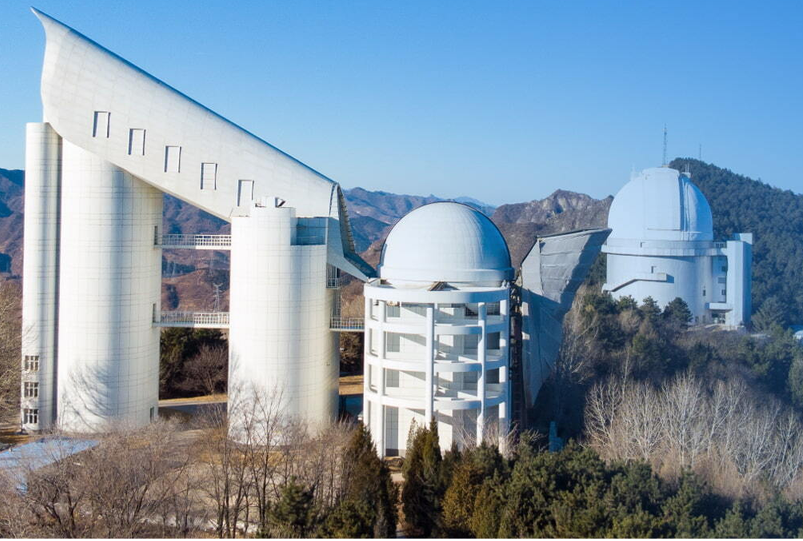
In a study published in Ultrafast Science, researchers from the Shanghai Advanced Research Institute (SARI) of the Chinese Academy of Sciences and Deutsches Elektronen-Synchrotron DESY reported that a continuous-wave (CW) X-ray free-electron lasers (XFELs) could generate terawatt-class attosecond X-ray pulses at megahertz repetition rates, based on comprehensive simulations of Shanghai HIgh repetitioN rate XFEL and Extreme light facility (SHINE).
An attosecond (10-18 seconds) corresponds to the natural timescale of electron motion in matter. X-rays provide element specificity and atomic-scale sensitivity, making them powerful probes of ultrafast dynamics in complex materials and chemical systems. However, generating high-power attosecond X-ray pulses at high repetition rates remains a challenge.
CW XFELs, driven by superconducting accelerators, offer a promising. These facilities can deliver XFEL pulses at megahertz repetition rates, enabling high-statistics measurements and greatly improved experimental stability, provided that attosecond pulse durations can be realized. SHINE, as one of the first hard X-ray CW XFEL facilities under construction, provides a platform for exploring high-repetition-rate attosecond science.
The scheme exploits a self-chirping effect within the electron beam where collective beam interactions imprint a strong energy chirp onto a small fraction of the bunch. The chirped beam is then transported through a specially designed dogleg lattice located immediately upstream of the undulator. The lattice is optimized to provide strong longitudinal compression while suppressing transverse dispersion, producing an ultranarrow, high-current spike that emits an intense attosecond X-ray pulse.
As this scheme relies on beam transport optimization rather than new hardware, it provides a practical and scalable route for CW XFELs to reach the attosecond regime.
For hard X-rays at 6 keV, pulses with an average duration of approximately 300 attoseconds and peak powers approaching 0.8 terawatts were possible to be produced. For soft X-rays at 1 keV, pulse durations of around 470 attoseconds with comparable terawatt-level peak powers were obtained. The high repetition rate would further enable rapid statistical averaging, significantly improving sensitivity to weak or rare ultrafast phenomena while enhancing experimental stability.
Such sources could open the door to nonlinear attosecond X-ray science, enabling multi-photon and higher-order electronic processes to be explored at atomic length scales. They could also enable attosecond X-ray crystallography, allowing direct observation of electron-density evolution during chemical reactions and phase transitions.
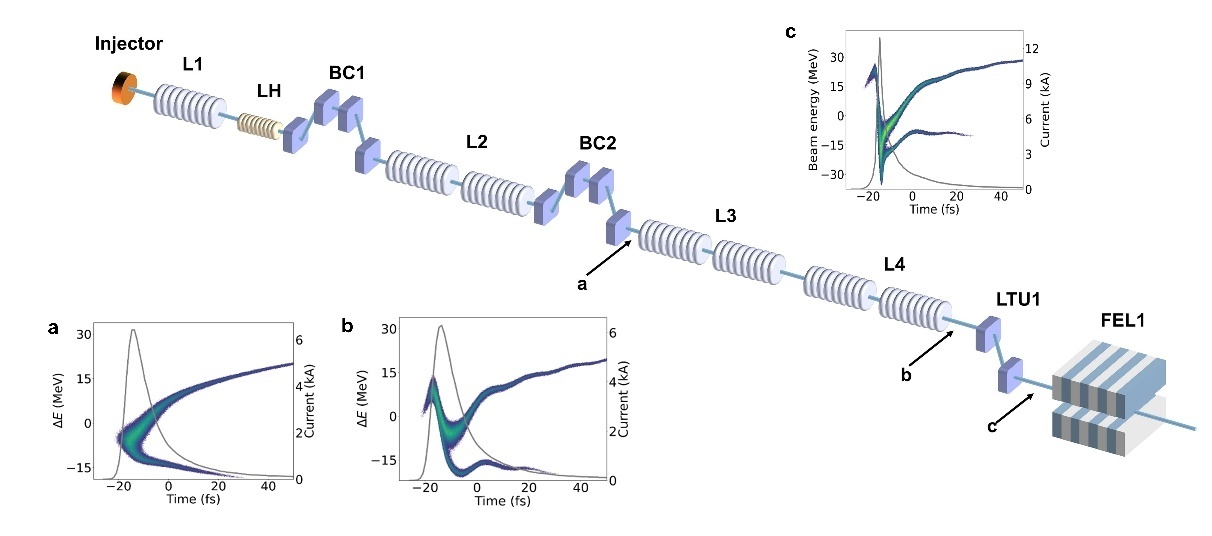
Figure 1: Schematic layout of the AttoSHINE and the corresponding evolution of the electron-beam longitudinal phase space (Image by SARI)
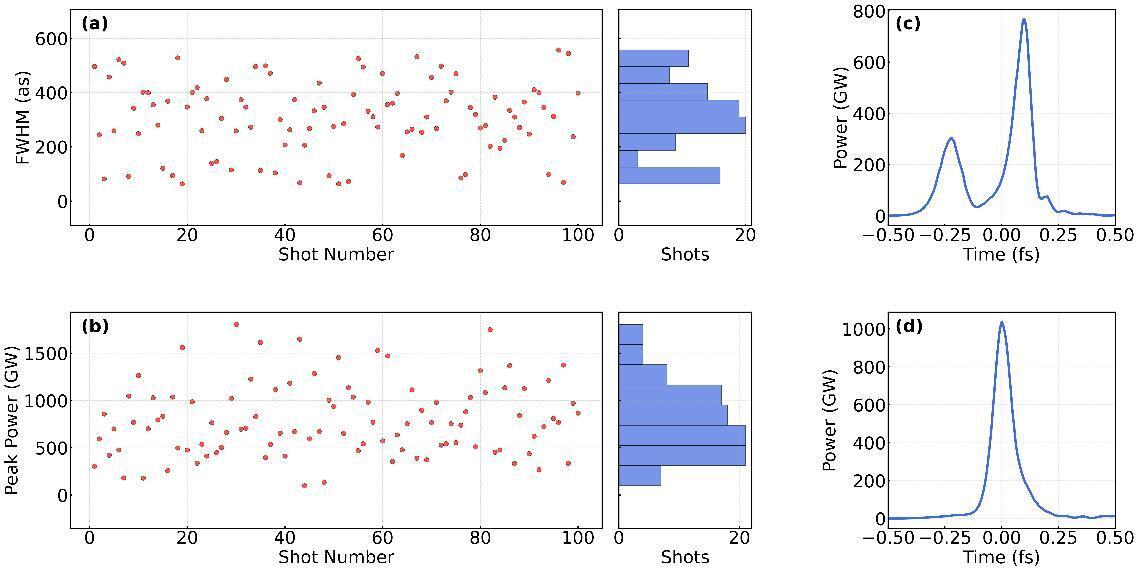
Figure 2: FEL simulation results at 6 keV (Image by SARI)
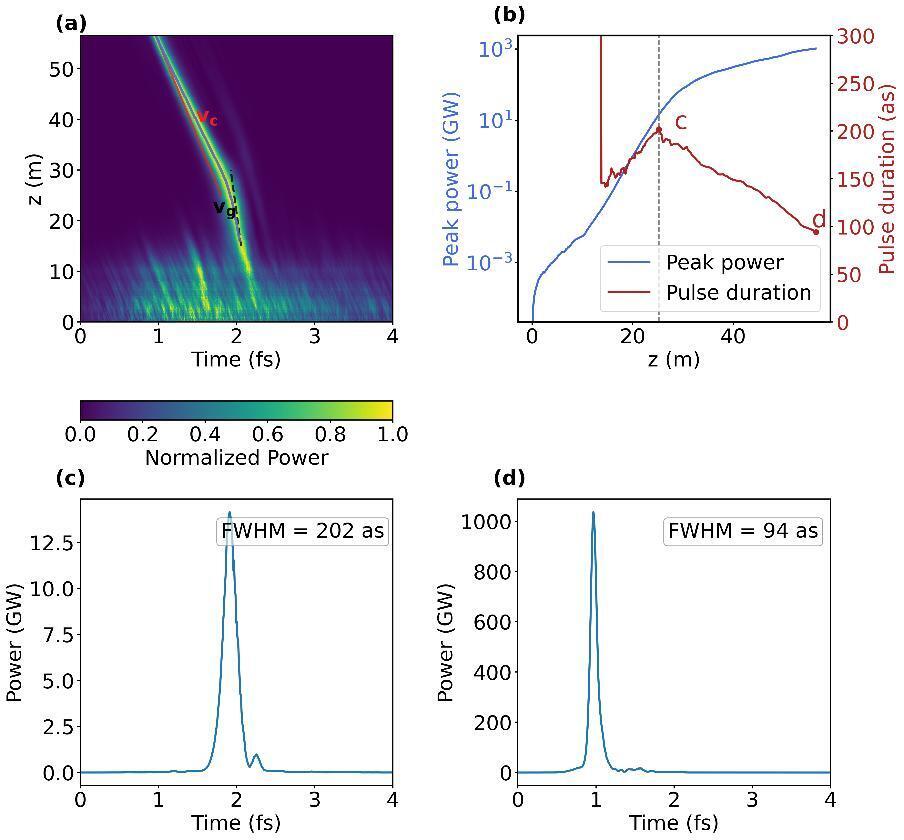
Figure 3: Superradiant behavior in the evolution of a terawatt attosecond pulse (Image by SARI)