Log in Sign up 中文
English
  • Home
  • About
  • Facilities
    • Material
    • Earth System and Environment
    • Engineering Technology
    • Space and Astronomy
    • Particle and Nuclear Physics
    • Energy
    • Biology
  • News
    • News & Updates
    • Research Highlights
  • Notice
  • User Portal
  • Home
  • Facilities
    • Material
    • Earth System and Environment
    • Engineering Technology
    • Space and Astronomy
    • Particle and Nuclear Physics
    • Energy
    • Biology
  • News
    • News & Updates
    • Research Highlights
  • Notice
  • User Portal

News

  1. Home>News>Research Highlights
  • News & Updates
  • Research Highlights
Research Highlights
  • Researchers Discover Seamounts Promote Expansion of Oxygen Minimum Zone in Western Pacific
    Researchers Discover Seamounts Promote Expansion of Oxygen Minimum Zone in Western Pacific
    A research team led by Prof. SONG Jinming from the Institute of Oceanology of the Chinese Academy of Sciences clarified the differences in the "seamount effect" between two cruises on M4 seamount in the Western Pacific, and found that seamount promoted the expansion of the OMZ to a certain extent.
    Apr 30, 2026
  • LHAASO Discovers 'Aquila Booster,' Challenging Theoretical Limits of Particle Acceleration in Pulsar Wind Nebulae
    LHAASO Discovers 'Aquila Booster,' Challenging Theoretical Limits of Particle Acceleration in Pulsar Wind Nebulae
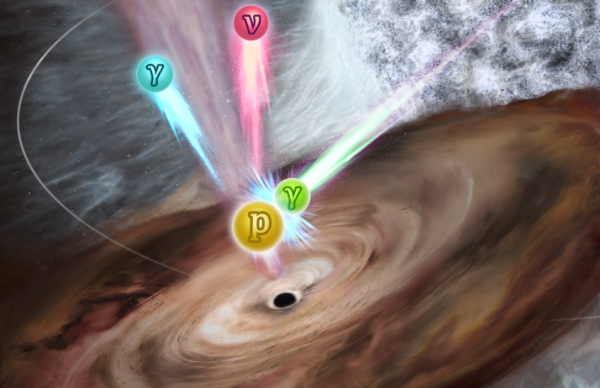
    The Large High Altitude Air Shower Observatory (LHAASO) has detected PeV (1015 eV) gamma-ray emission from a pulsar wind nebula powered by PSR J1849-0001 in the constellation Aquila, marking the discovery of a new PeVatron and posing a challenge to the classical theory of particle acceleration in pulsar wind nebulae.
    Apr 27, 2026
  • Breakthrough in Time-domain Characterization of Broadband Laser Pulses Achieved at SG-II Facility
    Breakthrough in Time-domain Characterization of Broadband Laser Pulses Achieved at SG-II Facility
    The research team from Shenguang Ⅱ Infrastructure at the Shanghai Institute of Optics and Fine Mechanics proposed a novel bandwidth extension method based on Spectral Correction and Trace Truncation (SCTT), which overcomes the trade-off between measurement bandwidth and sensitivity in broadband ultrashort pulse characterization at the algorithmic level.
    Apr 24, 2026
  • BESIII Experiment Observes Threshold Enhancement Effect in Dipion System
    BESIII Experiment Observes Threshold Enhancement Effect in Dipion System
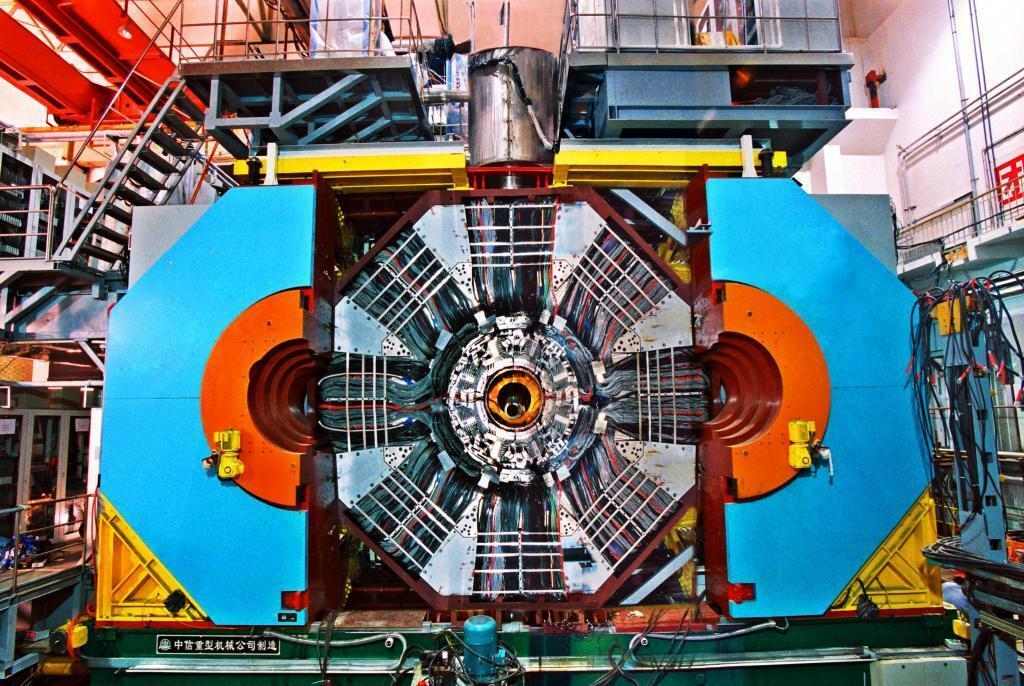
    The BESIII international collaboration experiment achieved a major breakthrough in charmonium decay research. The research team led by the Institute of High Energy Physics of the Chinese Academy of Sciences, for the first time, observed a distinct "resonance-like" structure at the dipion mass threshold.
    Apr 22, 2026
  • Observation of New Radiative Decays of Excited Hyperons Λ(1520)/Λ(1690) at BESIII
    Observation of New Radiative Decays of Excited Hyperons Λ(1520)/Λ(1690) at BESIII
    The BESIII Collaboration led by the Institute of High Energy Physics of the Chinese Academy of Sciences achieved a significant breakthrough in the study of electromagnetic radiative decays of excited hyperons. The researchers observed, for the first time, the radiative decays of the excited states Λ(1520) and Λ(1690) into a photon (γ) and a Σ⁰ particle.
    Apr 22, 2026
  • Researchers Reveal Nearly Isotropic Superconducting Property in Trilayer Nickelate
    Researchers Reveal Nearly Isotropic Superconducting Property in Trilayer Nickelate
    A research team led by Prof. ZHANG Jinglei from Hefei Institutes of Physical Science of the Chinese Academy of Sciences found that the trilayer nickelate La4Ni3O10-δ exhibits a nearly isotropic upper critical field under high pressure, providing insights into the superconducting mechanism of nickel-based materials.
    Apr 17, 2026
  • Scientists Identify Millisecond Pulsar PSR J0435+3233, Challenging Accretion-Driven Paradigm of Pulsar Formation
    Scientists Identify Millisecond Pulsar PSR J0435+3233, Challenging Accretion-Driven Paradigm of Pulsar Formation
    A research team led by Prof. WANG Na from the Xinjiang Astronomical Observatory of the Chinese Academy of Sciences has conducted in-depth observations of the millisecond pulsar PSR J0435+3233 using the Five-hundred-meter Aperture Spherical radio Telescope (FAST). The team found that PSR J0435+3233 has a high spin-down rate—two orders of magnitude greater than that of any other known millisecond pulsar in the Milky Way.
    Apr 14, 2026
  • New Copper Nanozyme Shows Powerful Tumor Suppression with High Precision
    New Copper Nanozyme Shows Powerful Tumor Suppression with High Precision
    Researchers from the Hefei Institutes of Physical Science of the Chinese Academy of Sciences (CAS), the University of Science and Technology of China of CAS, and the University of Macau, developed a coordination-unsaturated copper single-atom nanozyme.
    Apr 13, 2026
  • Spin-phonon Coupling Observed Without Long-range Magnetic Order
    Spin-phonon Coupling Observed Without Long-range Magnetic Order
    A research group led by Prof. SHENG Zhigao from the Hefei Institutes of Physical Science of the Chinese Academy of Sciences reported the direct observation of strong spin-phonon coupling in the absence of long-range magnetic order.
    Apr 09, 2026
  • Researchers Synthesize Two New Neutron-Deficient Actinide Isotopes: Berkelium-235 and Americium-231
    Researchers Synthesize Two New Neutron-Deficient Actinide Isotopes: Berkelium-235 and Americium-231
    Scientists from the Institute of Modern Physics of the Chinese Academy of Sciences, in collaboration with international partners, have synthesized two new isotopes—berkelium-235 and americium-231—at the Heavy Ion Research Facility in Lanzhou. Their findings provide critical experimental data for researching neutron-deficient actinide nuclei.
    Apr 03, 2026
12345NEXT
MORE

Copyright © 2002 - Chinese Academy of Sciences

Address: No.52 Sanlihe Road, Beijing ,100864