Log in Sign up 中文
English
  • Home
  • About
  • Facilities
    • Material
    • Earth System and Environment
    • Engineering Technology
    • Space and Astronomy
    • Particle and Nuclear Physics
    • Energy
    • Biology
  • News
    • News & Updates
    • Research Highlights
  • Notice
  • User Portal
  • Home
  • Facilities
    • Material
    • Earth System and Environment
    • Engineering Technology
    • Space and Astronomy
    • Particle and Nuclear Physics
    • Energy
    • Biology
  • News
    • News & Updates
    • Research Highlights
  • Notice
  • User Portal

Guoshoujing Telescope (LAMOST)

  1. Home>Facilities>Space and Astronomy>Guoshoujing Telescope (LAMOST)>News
  • News
  • Notice
  • Equipment
  • Contact
  • Data Resource
News
  • Researchers Chart Distinct Evolutionary Paths of Super-Earths and Mini-Neptunes
    Researchers Chart Distinct Evolutionary Paths of Super-Earths and Mini-Neptunes
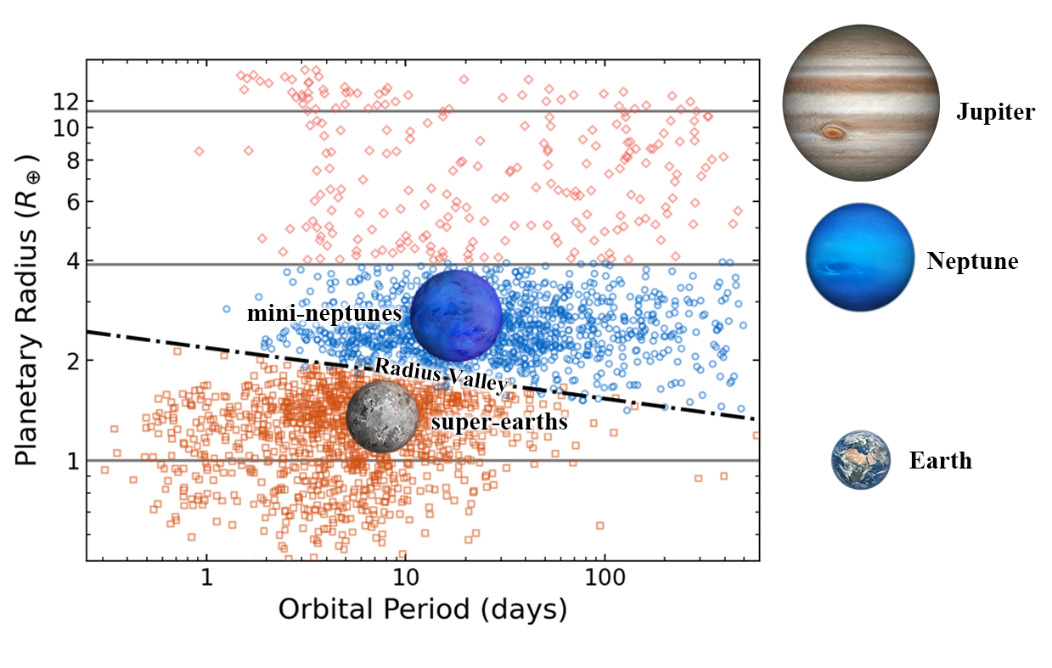
    A group of researchers have found super-Earths (SEs) and mini-Neptunes (MNs) planets followed distinct evolutionary paths, after conducting an in-depth study based on large-sample observational data, according to the National Astronomical Observatories of the Chinese Academy of Sciences.
    A group of researchers have found super-Earths (SEs) and mini-Neptunes (MNs) planets followed distinct evolutionary paths, after conducting an in-depth study based on large-sample observational data, according to the National Astronomical Observatories of the Chinese Academy of Sciences.The findings of the study have been published in the journal Science, with the help of observational data fro...
    Jun 29, 2026
  • Chinese Astronomers Uncover Clues to Formation of Star Clusters in Andromeda Galaxy's Halo
    Chinese Astronomers Uncover Clues to Formation of Star Clusters in Andromeda Galaxy's Halo
    Chinese astronomers have conducted observations and analyses of star clusters in the outer halo of the Andromeda Galaxy -- the Milky Way's cosmic neighbor -- hoping to uncover the growth story of this galaxy from these celestial "time capsules."
    Chinese astronomers have conducted observations and analyses of star clusters in the outer halo of the Andromeda Galaxy -- the Milky Way's cosmic neighbor -- hoping to uncover the growth story of this galaxy from these celestial "time capsules."The study was recently published in The Astronomical Journal.The Andromeda Galaxy is the nearest large galaxy to the Milky Way, located approximately 2....
    Jun 15, 2026
  • Distinct Evolutionary Histories Revealed by Different Orbital Period—Eccentricity Relationships of Super-earths and Sub-neptunes
    Distinct Evolutionary Histories Revealed by Different Orbital Period—Eccentricity Relationships of Super-earths and Sub-neptunes
    A study published in Science and conducted by Ke-Ting Shin, Dong-sheng An, Ji-Wei Xie, Ji-Lin Zhou and Fei Dai first revealed that super-earths and mini-neptunes follow different orbital period—eccentricity relations, indicating that despite with similar sizes, super-earths and mini-neptunes underwent distinct dynamical evolutionary histories.
    Planets sized between Earth and Neptune are ubiquitous around stars in the Milky Way galaxy but absent from our Solar System. These exoplanets, often term as super-earths and mini-neptunes, are among the greatest mysteries in planet formation. A study published in Science and conducted by Ke-Ting Shin, Dong-sheng An, Ji-Wei Xie, Ji-Lin Zhou and Fei Dai first revealed that super-earths and mini-...
    Jun 12, 2026
  • The Milky Way Disk May Have Flipped Over — Astronomers Reveal a Hidden Dark Matter Halo Twist
    The Milky Way Disk May Have Flipped Over — Astronomers Reveal a Hidden Dark Matter Halo Twist
    A team of Chinese astronomers has discovered that the Milky Way’s dark matter halo stands upright, suggesting that our galaxy’s disk may have flipped in the past few billion years due to cosmic interactions.
    A team of Chinese astronomers has discovered that the Milky Way’s dark matter halo stands upright, suggesting that our galaxy’s disk may have flipped in the past few billion years due to cosmic interactions.Using about 15,000 K-giant stars observed by LAMOST and Gaia, researchers built the first fully data-driven 3D model of the Milky Way’s stellar halo to explore the underlying dark matter ...
    Feb 24, 2026
  • Hot Jupiter Origin Unveiled! LAMOST Helps Reveal Formation Mechanisms and Tidal Evolution Pathways
    Hot Jupiter Origin Unveiled! LAMOST Helps Reveal Formation Mechanisms and Tidal Evolution Pathways
    A new study published in the prestigious journal Nature Astronomy on October 31, 2025, has uncovered a segmented decline in the occurrence rate of hot Jupiters with stellar age, providing the first clear evidence that these giant exoplanets form through multiple distinct mechanisms operating over vastly different timescales. The research, led by an international team using data from China's LAMOST and Europe's Gaia telescopes, also delivers precise constraints on stellar tidal dissipation, resolving long-standing questions about the orbital evolution of close-in planets.
    Figure 1: Schematic diagram of two populations of Hot Jupiters with different orbital configurations and different formation mechanisms.A new study published in the prestigious journal Nature Astronomy on October 31, 2025, has uncovered a segmented decline in the occurrence rate of hot Jupiters with stellar age, providing the first clear evidence that these giant exoplanets form through multipl...
    Nov 05, 2025
  • Pairs of stars that orbit each other exhibit unexpected magnetic activity
    Pairs of stars that orbit each other exhibit unexpected magnetic activity
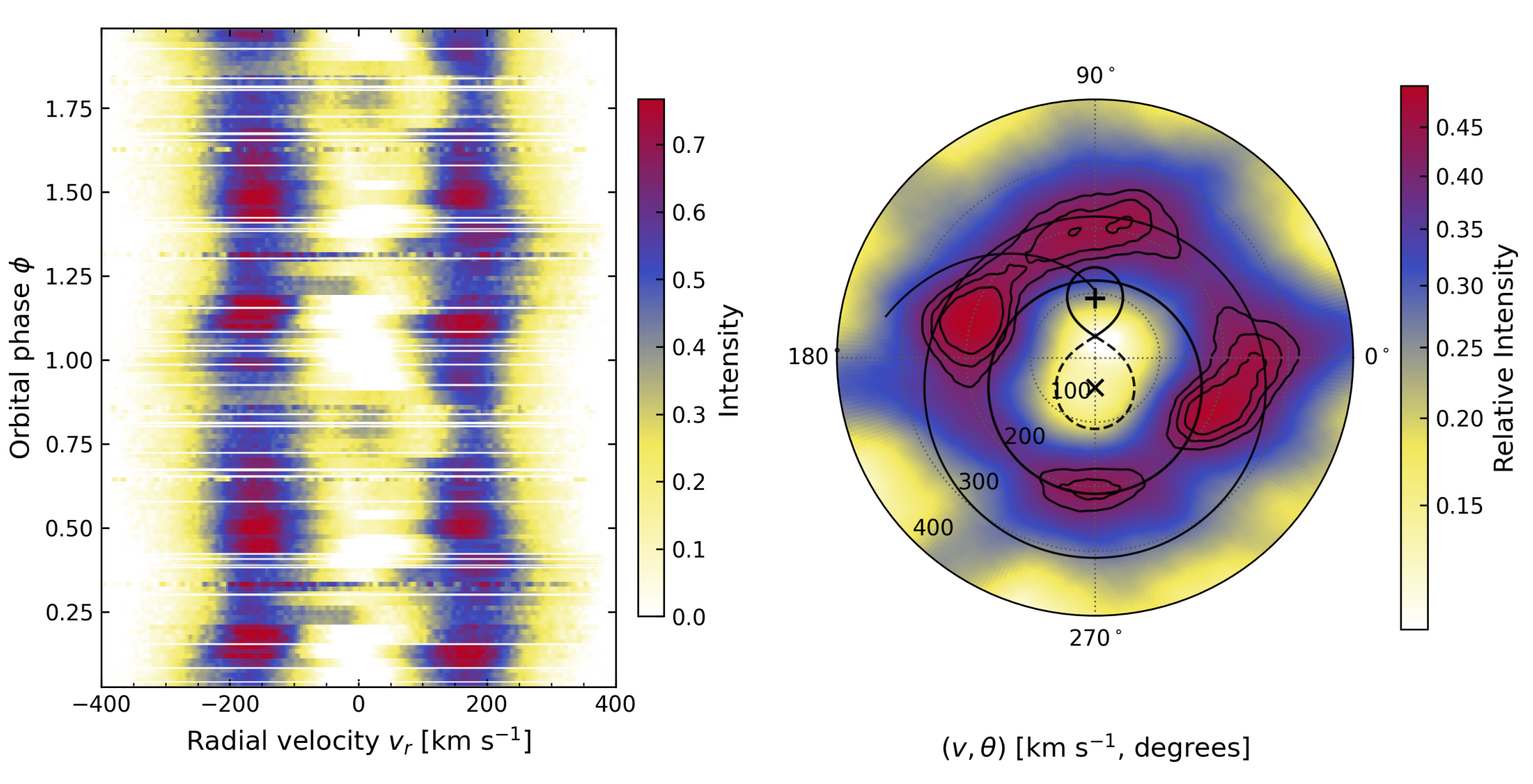
    A new study published by The Australian National University experts in Nature Astronomy reveals that stars in close binary systems – pairs of stars orbiting each other at close range – can exhibit unexpectedly high levels of magnetic activity. In this study, LAMOST has played a significant role.
    A new study published by The Australian National University experts in Nature Astronomy reveals that stars in close binary systems – pairs of stars orbiting each other at close range – can exhibit une-xpectedly high levels of magnetic activity. In this study,LAMOST has played a significant role.The study was led by Dr Jie Yu,from the School of Computing and the Research School of Astronomy an...
    Aug 22, 2025
  • Astronomers unveil 1st 3D map of Milky Way interstellar dust properties
    Astronomers unveil 1st 3D map of Milky Way interstellar dust properties
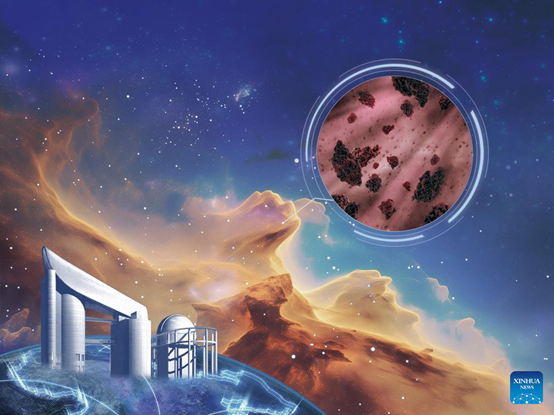
    BEIJING, March 14 (Xinhua) -- Chinese and foreign astronomers have unveiled the first three-dimensional (3D) map of the properties of interstellar dust in the Milky Way. This breakthrough will provide critical support for precise astronomical observation, and for studies in the areas of astrochemistry and galactic evolution.
    This artistic illustration provided by the National Astronomical Observatories of the Chinese Academy of Sciences (NAOC) shows the interstellar dust in the Milky Way and China's Large Sky Area Multi-Object Fiber Spectroscopic Telescope (LAMOST). Chinese and foreign astronomers have unveiled the first three-dimensional (3D) map of the properties of interstellar dust in the Milky Way. This breakt...
    Jun 13, 2025
  • Chinese Astronomers Discover Rare Super-Chandrasekhar Binary System
    Chinese Astronomers Discover Rare Super-Chandrasekhar Binary System
    Recently, an international research team discovered a rare super-Chandrasekhar binary system composed of a massive white dwarf and a hot subdwarf star. This discovery was made using data from the LAMOST spectroscopic survey. This study supports the possibility of new evolutionary paths for binary systems involving white dwarfs and provides a new potential formation channel for neutron stars.
    Recently, an international research team, consisting of researchers from the National Astronomical Observatory of the Chinese Academy of Sciences, the University of Chinese Academy of Sciences, Yunnan Astronomical Observatory, and Xihua University, along with Hungarian astronomers, discovered a rare super-Chandrasekhar binary system composed of a massive white dwarf and a hot subdwarf star. Thi...
    Jun 13, 2025
  • New Evidence for the Existence of Intermediate-Mass Black Holes Discovered
    New Evidence for the Existence of Intermediate-Mass Black Holes Discovered
    Based on observational data from the Gaia satellite and the Large Sky Area Multi-Object Fiber Spectroscopic Telescope (LAMOST), Chinese astronomers have discovered a star ejected from a globular cluster in the Milky Way, with a velocity as high as 550 kilometers per second. Their analysis suggests that such a high escape velocity is likely due to the presence of an intermediate-mass black hole at the center of the cluster.
    Based on observational data from the Gaia satellite and the Large Sky Area Multi-Object Fiber Spectroscopic Telescope (LAMOST), Chinese astronomers have discovered a star ejected from a globular cluster in the Milky Way, with a velocity as high as 550 kilometers per second. Their analysis suggests that such a high escape velocity is likely due to the presence of an intermediate-mass black hole ...
    Jun 13, 2025
  • LAMOST Helps Reveal the Evolution of Ultra-Short-Period Planet Systems Over Time
    LAMOST Helps Reveal the Evolution of Ultra-Short-Period Planet Systems Over Time
    Notably, among the young USP planet sample, the proportion of multi-transiting systems is lower, suggesting that young USP planet systems may have higher mutual inclinations and/or fewer neighboring companion planets.
    Recently, the exoplanet research group at the School of Astronomy and Space Science, Nanjing University, based on survey data from the National Major Scientific Infrastructure Guo Shoujing Telescope (LAMOST) operated by the National Astronomical Observatories of the Chinese Academy of Sciences (NAOC), combined with other international observational data, successfully determined the age distribu...
    Jun 13, 2025
12NEXT
MORE

Copyright © 2002 - Chinese Academy of Sciences

Address: No.52 Sanlihe Road, Beijing ,100864